How a third Iran war would be fought has already taken shape.
Foreign sources have reported that the Israeli Air Force flew through Syria and Iraq up to the Iranian border to rehearse its strikes on the Islamic Republic.
Israel has already used its F-35s to outwit and eliminate Iran's radar four times dating back to April 2024, followed by using its F-15s and F-16s to carry out massive bombing raids.
Over 200 Israeli fighter jets struck the Islamic Republic in the first wave in February of this year.
The US and Israel carved up Iran into sectors, with Israel focused on the western and Tehran sectors, and American forces focused on the southern sector and some targets in the Tehran region.

This plan worked and is likely to repeat itself on some level, with the first goal being to establish air supremacy so that drones, which are easier to shoot down than fighter jets but have advantages in being able to stand over a target for an extensive time period, can take a large role in the battle.
There is little Iran can do to prevent Israeli and US aircraft dominance.
Pickaxe Mountain: The facility where Iran could secretly make nuclear weapons
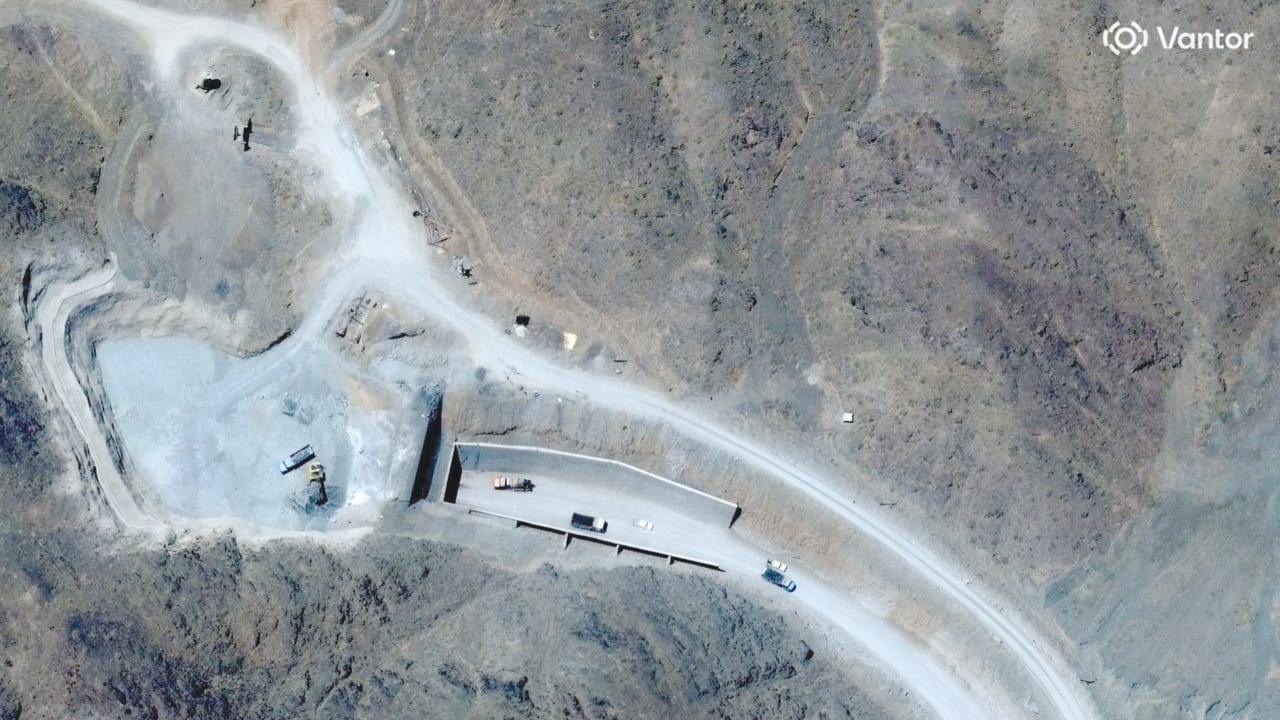
US President Donald Trump has focused the most on the Pickaxe Mountain nuclear facility.
The reason is not that the facility is already operational, as sources have conveyed to The Jerusalem Post that it still is not.
Rather, the reason is that it is unclear whether either Israeli or even US aircraft using mega 30,000 bunker-buster bombs can destroy it.
And if Iran succeeded in moving both highly enriched uranium and centrifuges to that facility, as well as making it operational, it could conceivably sneak out to a nuclear weapon without anyone knowing or being able to do anything about it from the air.
The US used 12 of its 30,000-pound Massive Ordnance Penetrator (MOP) bombs to destroy Iran's Fordow nuclear facility.
Fordow was deep enough under a mountain that many senior Israeli military officials believed it could not be damaged long-term by the smaller Israeli weapons.
The nuclear facility at Pickaxe Mountain is much deeper underground, such that more defense experts have raised doubts that even the US MOP bombs can destroy it.
In that case, the best moves would be to cause cave-ins across the facility before any important nuclear material, machinery, or know-how makes it into the facility.
Israeli officials have pressed Trump to deal with it, and anytime he has made threats relating to the facility, Iran has responded with harsh language, showing it also views the facility as one of its top strategic assets.
Think tank identifies potential weak points at Pickaxe Mountain
A new survey of the facility published on Friday by the Institute for Science and International Security focuses on two ventilation shafts as possible targets to better strike the insides of the facility: the probable ventilation port/shaft north of the ridge and the possible ventilation shaft south of the ridge.
This think tank report also flags the eastern and western primary tunnel entrances as the main likely points from which the Iranians would likely try to transport nuclear assets into the facility under the mountain.
All of these locations would need to be struck at a minimum to try to disrupt the facility's functioning, but it is a large, sprawling facility with many other assets noticeable from satellite footage, which would also likely need to be struck.
Of course, that is still only one strategic target.
How will Israel handle Iran's underground ballistic missile facilities?
In early 2026, Israel and the US mostly caused cave-ins at these facilities, only to find that within days and sometimes less than a day, Iran's bulldozer crews were able to reopen areas which had been caved in.
Even over the nearly 40-day war, Israeli tactics did not change much and did little to solve this issue.
In addition, between the June 2025 and early 2026 wars, Iran altered its ballistic missile strategy.
Instead of trying to fire concentrated huge barrages from a small number of centralized locations, it spread out its missile crews across the country, and often fired only small barrages at a time.
While these small barrages did not threaten massive nationwide harm, they did cause much of the country to regularly shut down, as they were more frequent and continuous.
Also, Iran watched where Israel was centering its air defense, and adapted mid-war to strike other areas, at one point striking Israel's South with a high degree of lethality only days after the IDF had said the South could go back to its more regular routine for lack of Iranian missiles being fired at it.
In early 2026, Iran also managed to destroy American bases in several countries, causing at least $5 billion in damage.
All of this means that Iran can yield air supremacy to Israel and the US, while still managing to wreak havoc across the region, including against Israel.
Has Israel figured out new techniques to take out the underground missile cities for longer, to find and destroy spread out missile crews, and to prevent Iran from taking advantage of Israel's shortage in air defense systems and interceptors?
Length of a renewed Iran operation
Will the operation last a few days or run on for weeks?
Trump has said he wants a fast and "clean" three-day operation, but Iran's regime does not need to cooperate.
They have said they will fire more directly on US ships, on underwater internet cables, and on critical energy facilities of US allies.
Already, the Saudis have faced mass-casualty lethal attacks from the Houthis on high profile economic and transport facilities.
And what will really be achieved in three days?
If Iran retains ballistic missiles, some of its nuclear assets which remain under rubble, drones, and the ability to harass naval ships trying to pass through Hormuz, will it change its fundamental negotiating position because its military damage went from $200-300 billion to $220-320 billion?
Many Israelis are skeptical that anything but a longer and more sustained operation will change Iran's behavior.
Likewise, some Israelis, such as former defense minister Yoav Gallant, have suggested that only a ground operation, not airstrikes, can neutralize some of Iran's highly enriched uranium buried deep underground.
US, Israeli targets in Iran
Will Israel and the US finally strike Iran's top energy facilities, which some Mossad officials believed could lead to regime change at an earlier date?
Or will they hold back fearing such strikes will turn Iranians into supporting their regime and against any outsiders?
What will happen when Trump wants to end the conflict earlier than Israel, and given that he, and especially his advisors, have lost interest or faith in any near-term regime change?
How will Israelis feel about having been shot at by Iranian ballistic missiles for the fifth time in three years without the latest operation seeming to lead to a clearer end game regarding at least the nuclear threat, let alone the ballistic missile threat, or leading to regime change?
There is no question that a US and Israeli third war against Iran can push off the nuclear, and especially the ballistic missile threats deeper into the future.
But it is unclear how Israel will grade the success of such an operation.