
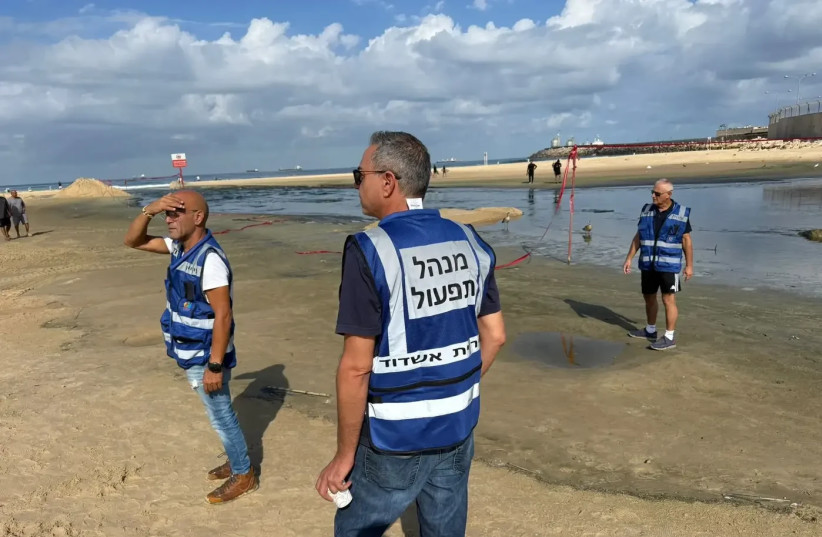
Following recent rainfall last Thursday and the resulting drift from the upper Lachish River, a drop in oxygen levels was recorded in the water, putting the river's fish and wildlife at risk. Teams from the Environmental Enforcement Department, assisted by the Coastal Department and professional bodies, worked around the clock over the weekend to stabilize the situation and protect the animals.
As part of the operation, 5,000 cubic meters of water were pumped into the river in order to dilute the concentration of pollutants and help raise oxygen levels. At the same time, an oxygenation system was activated, and teams conducted scans and oxygen measurements over 48 hours. The actions bore fruit: Oxygen levels in the water rose, and the rapid response helped save hundreds of thousands of fish and protect other wildlife in the river.
Early preparation and continuous monitoring in the field
The first rains present a familiar environmental challenge each year. Runoff from the upper drainage basin carries drift, waste, and organic matter, which can harm water quality and lead to a drop in oxygen levels. These materials reach the lower part of the Lachish River from areas outside Ashdod's boundaries as well, requiring advance preparation and a quick response.

Throughout the weekend, municipal teams monitored the condition of the water and wildlife. Continuous scans and measurements allowed professionals to evaluate the impact of their actions and adapt the response to field conditions. The Coastal Department assisted the Environmental Enforcement Department as part of the joint municipal effort.
Ehud Moyal, head of the Environmental Enforcement Department, said: "We prepared in advance for the first rain, and upon identifying the drop in oxygen levels, we acted quickly. Throughout the weekend, teams worked around the clock, pumping water into the river, operating the oxygenation system, and conducting scans and measurements for 48 hours. We saw oxygen levels rise following these actions, which was a significant sign of improvement. Our goal was to protect thousands of fish and the river's ecosystem. I thank the department teams and the Coastal Department for their mobilization and joint work."
Preserving river rehabilitation achievements
The Lachish River is a habitat for fish, turtles, and waterfowl, and serves as a central urban nature space in Ashdod. Ongoing investment in its rehabilitation and preservation also requires continuous monitoring and a quick response to changes in water quality.
The weekend activities join patrols and monitoring conducted along the river throughout the year. The municipality emphasized that monitoring of water quality and animal conditions will continue as needed, in cooperation with professional bodies, to preserve the ecosystem and the achievements of rehabilitation built over years.