Let's start with a thank you.
Thank you to all these thousands of people, the truly beautiful Israelis, whom in a utopian world we would want by our side in every place or field. Those whom we would want to manage this country after the elections and before them as well. People who give without thinking about receiving, who are talented each in their field and were not just appointed to a role because they are someone's cronies. People whose contribution comes first and foremost with a smile, even if it is hot, cold, and at the expense of plenty of other things that come first.
Thank you to those for whom the phrase "may you always be on the giving side" is part of their lives, and probably not just at Midburn, which took place last week (November 2-7, 2026). Because while some people arrive to dance and travel in a wonderland for a week, there are also those who dedicate entire days to ensuring that this entire temporary city works as it should. Behind the parties, exhibits, and colorfulness of the playa operate dozens of voluntary departments, some of which are responsible for tasks that can only be found at an event like Midburn. These are people who come not only to participate in the celebration, but also to create it, manage it, and ensure it takes place.
So we actually went out into the field to meet some of the most intriguing and colorful departments of the Israeli Burn, and to hear what makes their volunteers dedicate so much time, energy, and love to a city that rises in the desert for just a few days and then vanishes as if it never were.
The Fire Tribe: Turning a dream into a flame
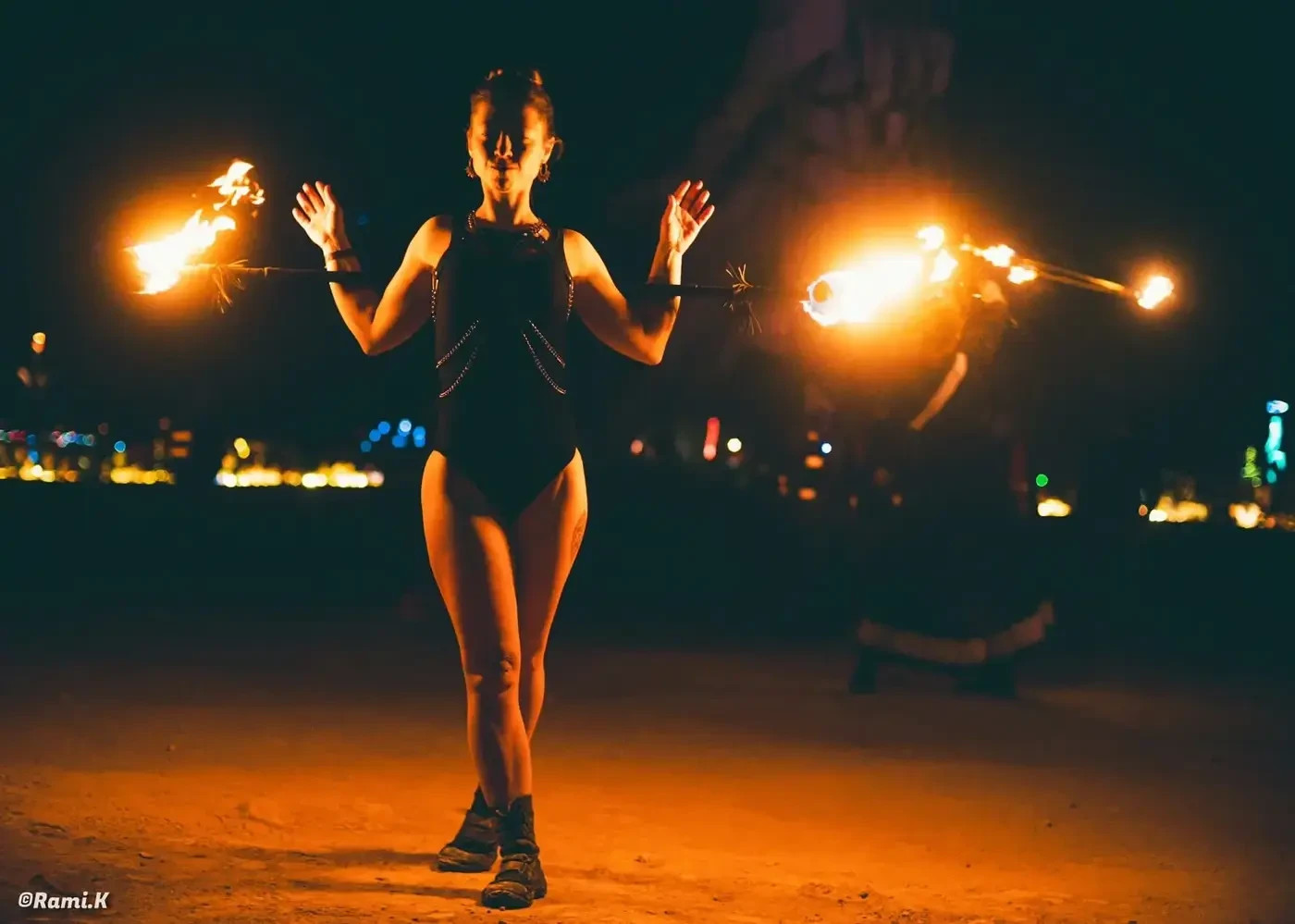
What is Midburn without crazy and wonderful art installations every single year? So there are those who build them for months, but there are also those responsible for the moment when the entire playa holds its breath and watches those creations go up in flames. Achinoam Weinstein volunteered for the fourth year in the "Fire Tribe," the department responsible for the burns during the event and considered the largest in Midburn, with several hundred volunteers. This year she was part of the leadership team for the fire ceremony, alongside Angelina Kuperschmidt, Adi May Niniyo, and Lior Bar. The four were responsible, with the support of the Fire Tribe, for everything happening on stage before the burning of the Effigy – the central art installation of Midburn – as well as other performances and installations that went up in flames during the event.
What makes this volunteering so special?
"I think I have the coolest volunteering there is, just as others probably think about their volunteering," Weinstein said. According to her, the fire ceremony has something symbolic and liberating about it: "It is the peak of the event, and an opportunity to transmute the power of matter into energy and release everything. Midburn is a temporary creation, and there is something about consuming this thing when it reaches its peak. The burn can be seen from everywhere on the playa, and it becomes a symbol of Midburn." Behind the show, she emphasizes, there is also great responsibility, including planning, licensing, commitments, and strict safety procedures.
This year the leadership team brought together 52 fire artists and two musicians who played live, alongside Israeli circus artists. Together they created a ceremony combining art, music, and fire, which sought to draw the audience into the experience and allow them to connect with it. The overall theme of Midburn this year was Past forward, and the team chose the concept of a "clock without time" with four segments representing past, present, and future, shifting and revolving into one another. "We wanted to create something that would blend the audience inside, rather than just having them stand as outside observers," Weinstein explained.
Weinstein was responsible for about 60 volunteers, including artists, musicians, and makeup artists. During the week, rehearsals for the ceremony took place, and a few hours before the show, everyone gathered for the final rehearsal. "One of the things that brings me the most joy is creating this thing and seeing it happen, but I also really enjoy giving my volunteers such an experience. I have been doing this for the fourth year, and it just expands the heart to let them bring their art to the stage."
"The ceremony symbolizes for me and for others something larger than us. We dreamed it, and it becomes something even bigger than what we dreamed," she said. "It is exciting to see how all the people and creations connect into one thing." The fire ceremony by the "Conclave" fire artists group took place on Thursday at 8:00 PM, ahead of the burning of the Effigy – the peak moment toward which days of creation, work, and volunteering converged.
Art Cars: Making dreams come true on wheels
If you thought people only get around on foot at Midburn, you should meet the Art Cars department, which is responsible for the art vehicles that moved around the playa and became mobile art installations themselves. Rachel Selfin and Eden Moisis led the licensing sector in the department, alongside a team of eight volunteers who served as an address for artists and helped them get their vehicles off the ground – from the concept stage to operation in the field. "My role relates to safety and licensing, and working opposite the fire department," Selfin said. According to her, the department includes many dozens of volunteers, including electronic escorts, "angels" – patrollers who move around the field – and day managers, who are essentially the eyes of the team on the playa. "They identify reckless driving and assist those in need of help, and keep drivers and passengers safe," she said. Alongside these, setup and licensing teams operated, staffing the office responsible for the field and conducting a practical test for each vehicle with the help of an external vehicle inspector.
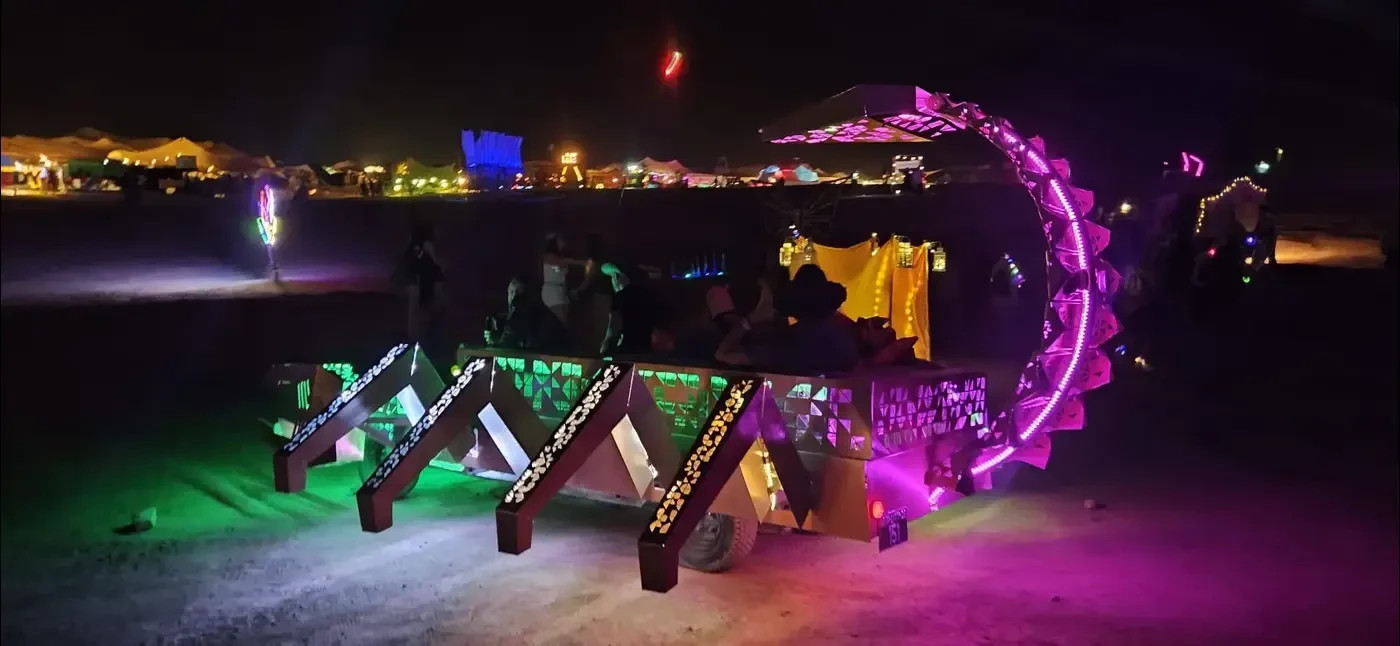
Vehicles allowed to participate in Midburn and granted a permit are defined as mobility scooters or electric club cars only. "This is for safety, and also so we can create oversight and limit the speed to five kilometers per hour. These are vehicles that undergo conversion according to Midburn guidelines," Selfin said. "Anyone can submit a request to the Art Cars department, and if they meet the requirements, they are welcome to bring their vehicle. The requirements include perimeter lighting, night lighting that allows visibility for a distance of ten meters, and a fire extinguisher in every vehicle."
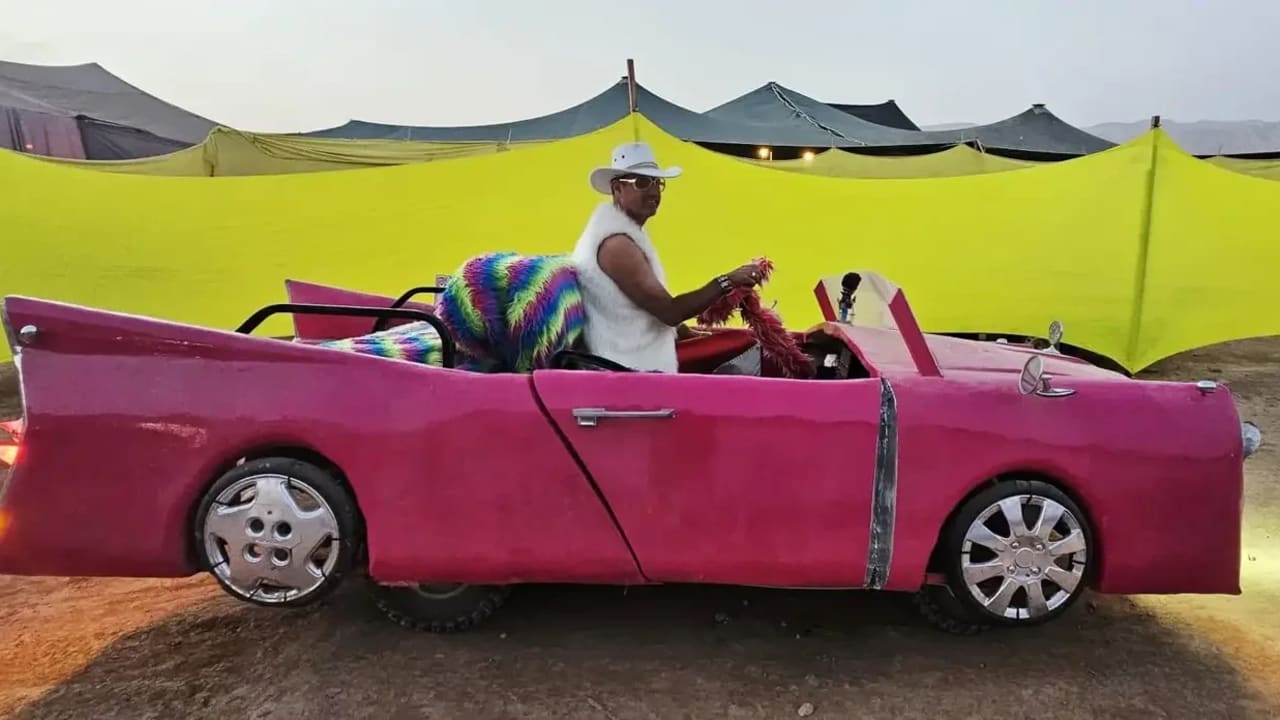
There are also exceptional vehicles, with multiple seating levels, trailers, and other creative structures. "For example, we have a vehicle from the Mustache Cult, and we helped them bring their idea to expression and help them execute it. I help people make their dreams come true," she added.
Beyond the art and the experience, the department also has a significant social role. "This year 61 vehicles were registered, and out of them 45 registered for accessibility and transportation of people with various disabilities," Selfin said with pride. According to her, the department works in cooperation with the accessibility department to assist those who find it difficult to reach art installations or parties across the playa. Thus, the art vehicles are not just a colorful attraction, but also a way to allow more people to take part in the event.
One of the central sources is the DMV – the department responsible for art cars at Burning Man in the United States. "There it is a much larger enterprise, with the ability to bring in larger and more motorized tools, including art vehicles in unusual shapes, such as vehicles resembling fire-breathing dragons and octopuses," Selfin said. At Midburn, the challenge is to take the community's ideas, adapt them to the event's conditions and safety rules, and turn them into part of the temporary city that rises in the desert. "This is for the community, for the community's art, and to make more happiness in the city," she concluded.
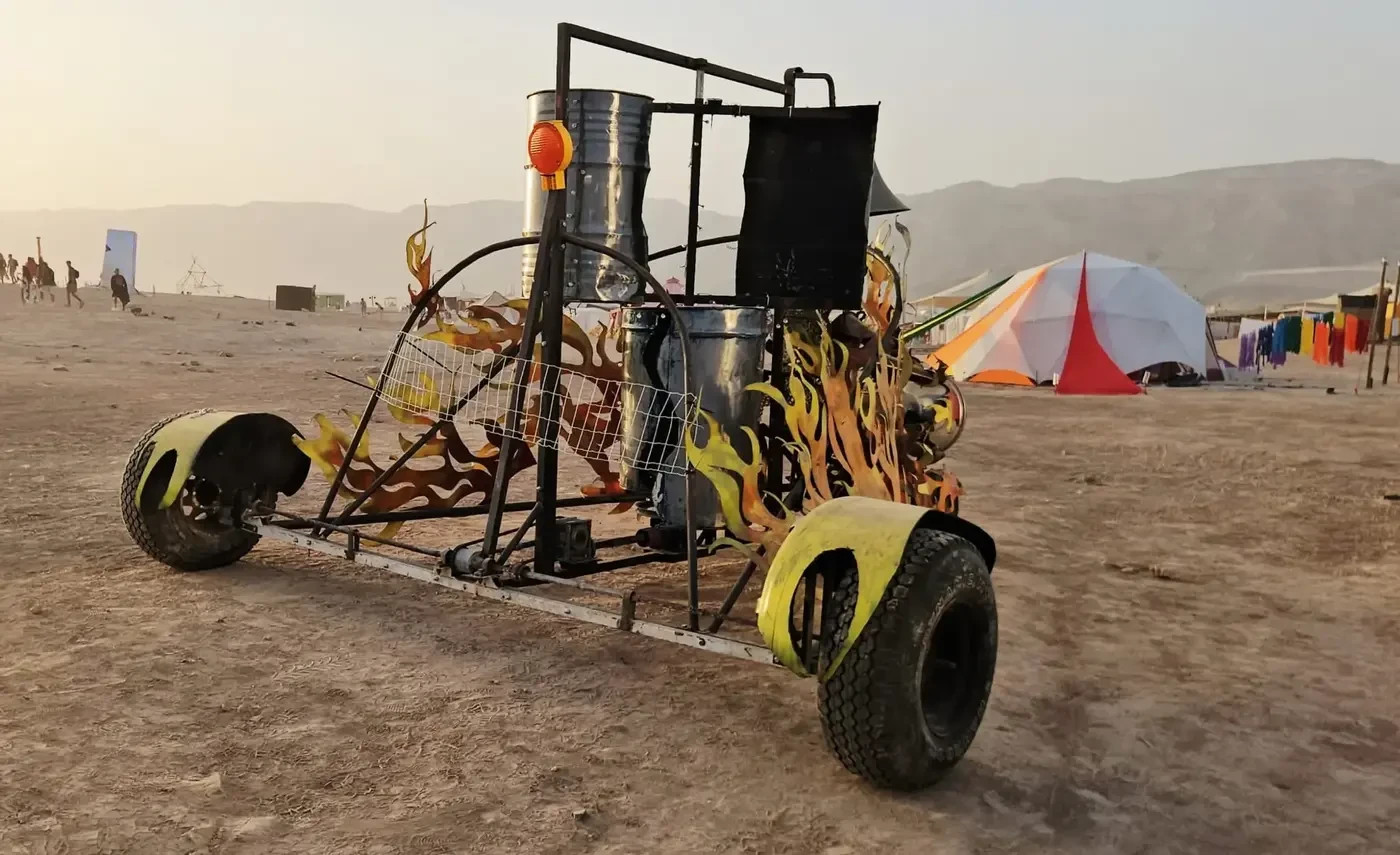
The Spritz Department: The unit that fights the dust
Sometimes the most important volunteering at Midburn is precisely the one where art is not seen, but rather mainly water and dust. The Spritz Department, established for the first time this year (although it had other versions in the past), was born following a problem well known to those arriving for setups in the temporary city: The massive amounts of dust flying around the field. Ido, who identified the need, decided to take matters into his own hands. "There is a saying at the Burn: If you see a job – it's yours," he recounted. "I started talking to people, they directed me to production, and there they said it sounded like a good thing to promote."
In the Spritz Department, ten volunteers operated to run the water trucks and guide them across the playa. "In every shift, five people are present who do not drive the trucks themselves but navigate them, serve as traffic controllers, and make sure the path is clear, that people clear equipment, and that no one is surprised by the stream of water," Ido explained. "The trucks wet the paths, compact the layer of dust, and turn it into a more stable surface, instead of a cloud of dust flying with every movement." The trucks' activity takes place up to twice a day, both during setups and presumably throughout the days of the Burn, "At this stage we are still in a pilot," Ido said.
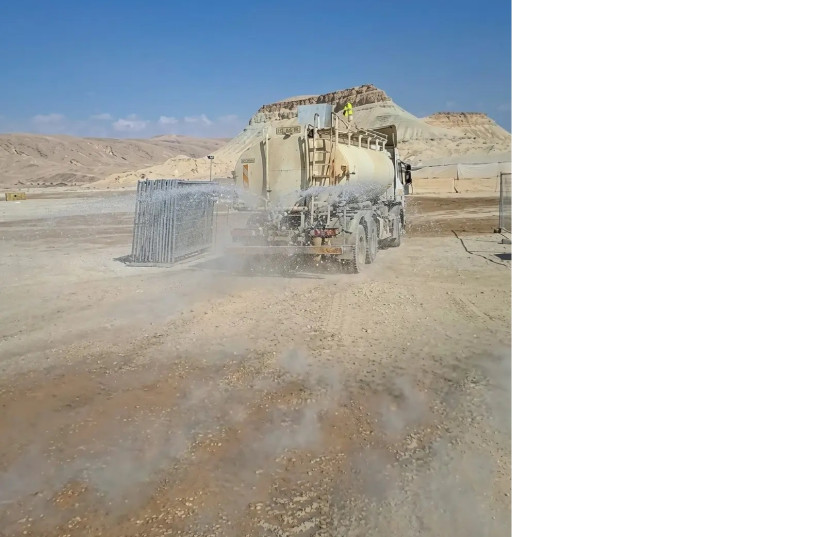
The department's equipment included two trucks, each containing 20 cubic meters of water with 60 horsepower, pushing water at a pressure of 10 horsepower. The trucks were equipped with a system pumping about 30 to 50 liters of water per second. This is regular water, whose entire purpose is to fight the dust and keep the paths passable and more comfortable for movement.
Karkhana Department: Cooling the desert
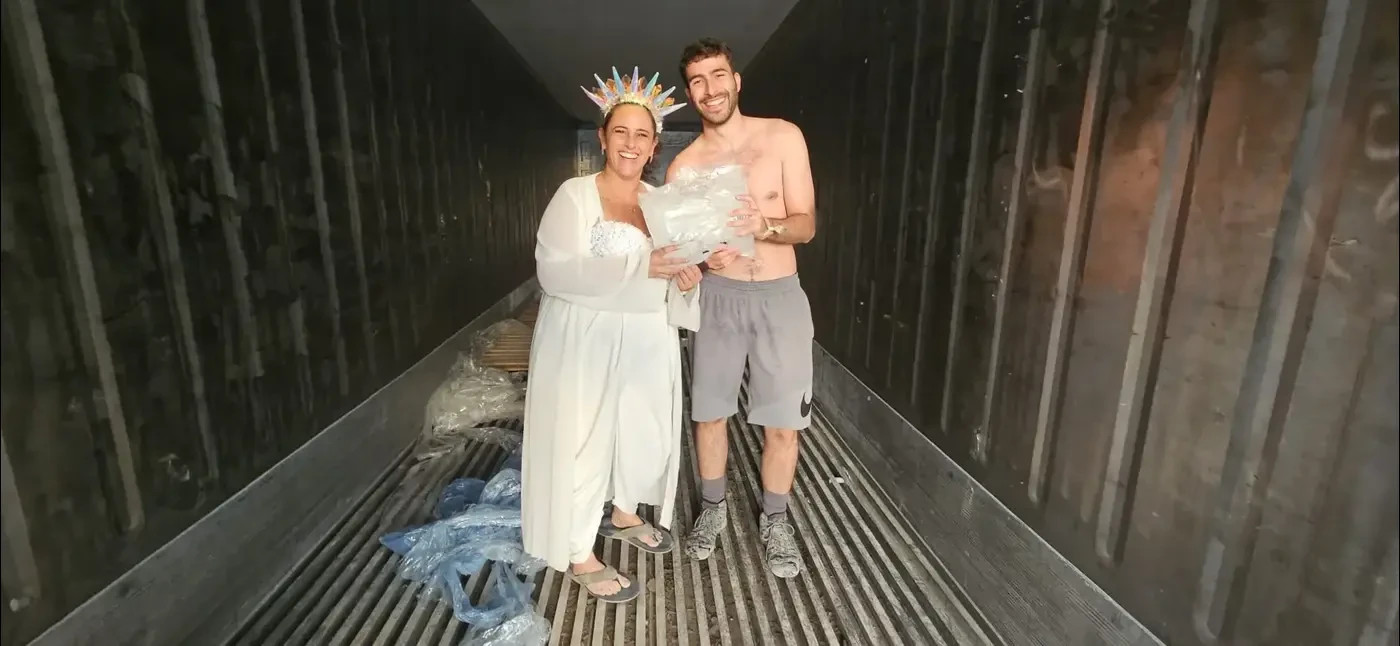
"We sell ice. The only place at Midburn where breaking the ten principles is allowed," said Chaya Soggot, who has led the department for the fourth year.
Chaya has been volunteering in the ice department since 2016. "We provide one of the most necessary things here, keeping food from spoiling, for example, and also for the medical tent. We receive people broken from the heat, carrying weight and carts, and then we cool them down," she recounted.
In the huge refrigerator holding hundreds of bags of ice at a price of NIS 35 per bag, the temperature is minus 18 degrees, and according to her, Burners "hug the bag of ice and are happy."
"What won me over in the department was an ice party we threw in a container a decade ago, when it emptied out of half the ice, and I've been there ever since."
The dream that remains after everything disappears
Ultimately, Midburn is much more than a temporary city that rises and disappears in the heart of the desert, much more than giant art installations, parties, fire, and colorful vehicles. Behind everything that visitors see, photograph, and take with them in their memory, there are hundreds of people who choose to give of themselves, sometimes for months of preparations and sometimes during long shifts under the sun, without asking for anything in return. Much like Camp "Retro," which chose to host me for two wonderful and happy days and asked for nothing, at most that I lend a hand at the bar during the most colorful eighties party taking place today.
These people do not necessarily stand at center stage, and their names will not always appear alongside the creations, but without them this city simply would not exist. And perhaps that is one of the beautiful things about Midburn: Precisely in a place where everything is temporary, the dust settles, the fire goes out, and the creations fade, something remains that is hard to dismantle – the feeling that it is possible to build a different world together, if only for a few days, when everyone is willing to bring a little bit of themselves to it.
Now, after these unclear elections, I wish we could build this world in the real Israel as well.