The past three years have been among the most complex the Israeli restaurant industry has ever known. Following the COVID-19 crisis came long months of economic uncertainty, a sharp rise in operational costs, labor shortages, erosion of public purchasing power – and finally, a prolonged war that has affected nearly every aspect of life in Israel. For many restaurateurs, this meant transitioning to survival mode, cutting expenses, freezing development plans, and at times, even closing down.
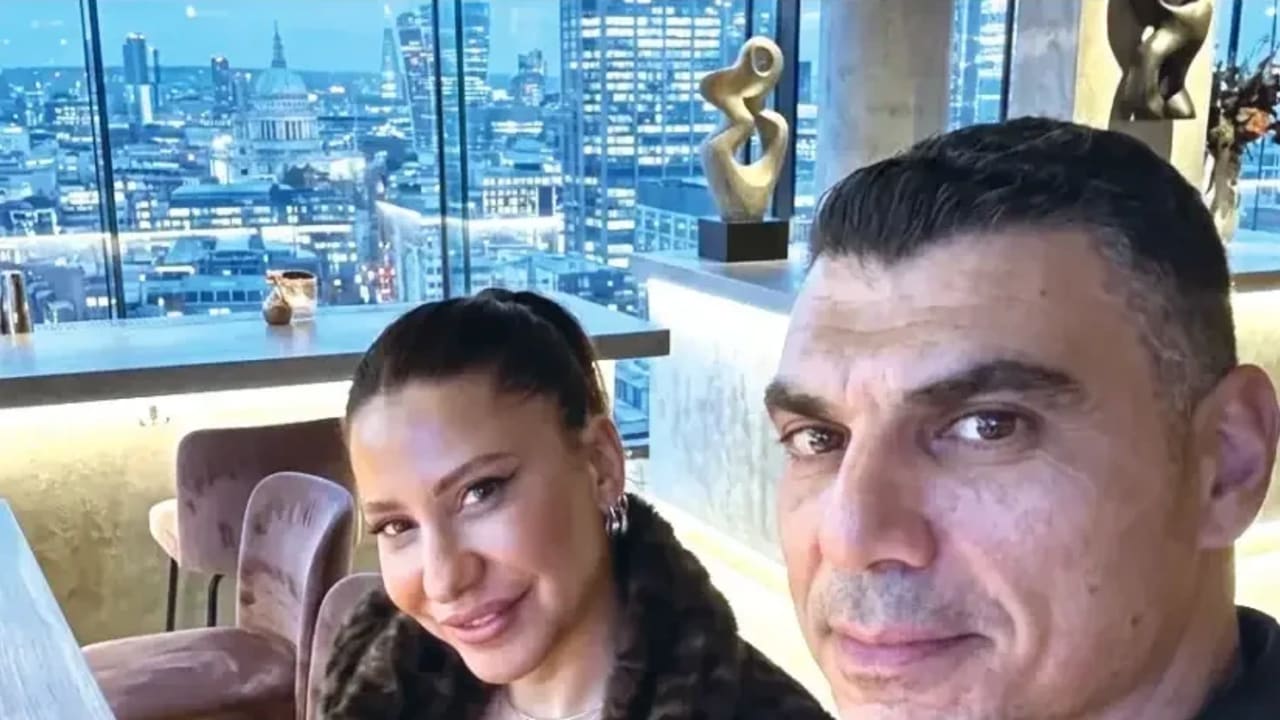
Yet alongside these stories, there is another side to reality. It does not necessarily reflect the state of the entire industry, where many are still dealing with significant hardships, but it does indicate that in certain cases, entrepreneurs have managed to identify opportunities precisely at a time when others preferred to wait. Take, for instance, the story of Chen and Avichai Menachem, a restaurateur couple from Rehovot and owners of the Ototo Asian restaurant group, who in recent years chose to do exactly what conventional business logic would seemingly advise against: To expand operations, open new restaurants, and invest millions of NIS in the culinary brand they built.
Over the past year, the couple celebrated the one-year anniversary of their restaurant in Gedera, established with an investment of approximately NIS 5.5 million; completed a significant relocation and expansion of their Rehovot restaurant at a cost of more than NIS 2.5 million; and concurrently, they are moving forward with opening another restaurant in Ashdod, Mizo, which they say is expected to be their largest investment to date. These figures stand out sharply against the backdrop of the industry's reality, yet for them, the story does not begin with money at all.
"We've been in this field our whole lives," says Avichai. "I've been working in restaurants since I was 16. A year after the army, I already opened the first restaurant in which I was a partner. This is something we've been living and breathing for years. For us, the restaurant business is not just a profession. It's a way of life."
The professional connection between the couple was built right from the start. Avichai grew from within the kitchens, while Chen handled the service and hospitality side. "Avichai started in the kitchens and I was out front with the customers," she relates. "It was a natural combination of what he is good at and what I am good at. Even then, a very clear division of roles was formed, with each bringing their own strengths." Today, after 21 years together and three daughters, this partnership remains at the center of their business endeavors.
For a long time, Chen was not part of the daily operations at the restaurants at all. After years of intensive joint work in two restaurants they managed in Kastina, the couple decided to change direction. "We were 150% into it," Avichai recalls. "We were young parents, constantly at the restaurant, always chasing. Grandparents, a babysitter, another babysitter. Our lives revolved around work. At a certain point, we realized we needed to stop and make a change."
While Avichai continued to develop within the restaurant industry, Chen turned to a completely different world. "I started learning how to sew as a hobby," she says. "Slowly but surely, it grew and developed into a very successful business. I built my own brand, with tens of thousands of followers on social media and a large community around it."
A few years ago, the couple decided to join forces once again. "Avichai simply told me: 'I need you.' And in a way, he was right. I brought everything I had learned during those years into the business: The creative thinking, the understanding of branding, of customer experience, of creating something people remember."
Looking for an experience
One of the recurring claims today in the restaurant industry is that it is becoming increasingly difficult to get people to leave their homes. The cost of living, altered consumer habits, and numerous delivery options require restaurant owners to offer added value beyond the food itself. At Otototo, they decided to take this idea one step further. Not an innovative concept, but certainly not an obvious investment in days of an immense economic crisis in the industry. How is this expressed? On Thursdays, for example, mentalists wander between the tables.
On Mondays, rotating concept nights take place with dedicated menus. On special occasions, such as Valentine's Day, resources are invested in creating personalized experiences for guests, ranging from special activities to personal keepsakes. "I think that today it is no longer enough to serve good food," Chen says. "Of course, the food must be excellent, but people are looking for much more than that. They are looking for an experience. They are looking for a story. They are looking for an evening they will remember long after they leave the restaurant."
As mentioned, behind each of these initiatives lies a significant investment. "We invest a lot of money in this," she admits. "These are things that don't always pay off directly, but for us, they are an integral part of hospitality." This approach is also reflected in less conspicuous places. For instance, the couple invests in dedicated delivery packaging, developing special menus, and the ongoing training of their teams. "We don't do anything half-heartedly," Avichai emphasizes. "When we build a special evening, it can start months in advance. Tastings, photoshoots, branding, staff training, raw materials, sometimes even new serving dishes. We want whoever comes to feel that we invested in them."
Perhaps more than anything else, the couple's philosophy is expressed in the way they treat whoever enters the restaurant. During the conversation, they hardly use the word "customers." Instead, the word "guests" recurs time and again. "It's not by chance," Avichai says. "To us, they truly are guests. I want whoever walks in to feel as if they have come to our home."
According to the couple, every complaint, comment, or criticism from customers is handled personally. "We call people after they've visited us," Chen relates. "We ask how it was for them, how the experience was, how the service was. It is truly important for us to know." Avichai adds: "There is no complaint we aren't aware of. There's no such thing. If someone wasn't satisfied, we want to know why. Not because of the money, but because we want to improve."
There is no such thing as closing
The obvious question is why continue investing precisely now. Why not wait until the situation stabilizes, why take risks on the scale of millions of NIS at a time when many in the industry choose to sit on the fence? "Maybe it sounds strange," Avichai says, "but we don't know how to work any other way." He notes that even during the most complex periods, including during the war, he refused to close the restaurants. "I went through COVID. I went through wars. I went through crises. I have one rule: There is no such thing as closing. There is no such thing as not working. If someone wants to come to us or order from us, we need to be there for them."
Behind this statement also lies a clear management philosophy: Instead of focusing on the question of how to downsize, the couple prefers to focus on the question of how to improve. This was the case when they decided to expand the restaurant in Rehovot, even though the existing one was already working well. "We had a successful restaurant," Avichai says. "But I felt that it no longer gave guests the experience I wanted to provide. I felt crowding. I felt that we could do better. So we decided to move."
"I think that ultimately people feel it," he adds. "They feel when you invest in them." In the end, after all the talk about investments, restaurants, menus, and expansion plans, Avichai repeatedly returns to the same idea. "A lot of people think our difficulty is suppliers, employees, regulation, or bureaucracy," he says. "But for me, that's not the hardest thing."
According to him, the real challenge is understanding that sometimes the meal is only a small part of the story. "We never know what the person sitting across from us is going through. They might have come to eat, but they might have had a hard day. Maybe they need someone to smile at them. It could be that the treatment they receive will make their day. That is why I always tell our team: Do not take this for granted. People don't come just for the food. They come for the feeling. And ultimately, our hardest job is to make someone else happy."
The question hovering over the story of Ototo is not how much the next restaurant cost or how much the next branch will cost. The question is whether, in an era where consumers think twice about every expense and many businesses struggle to look past the coming month, there is still financial value in investing in what cannot be measured in Excel spreadsheets: A sense of belonging, memory, personal attention, and an experience of hospitality. Chen and Avichai are convinced that there is.
In recent years, they have built a brand around this assumption, invested millions of NIS, and continued to expand. If there is a lesson to be drawn from their story, it is perhaps not related to the restaurant business alone, but rather to a broader question that occupies many businesses today: How loyalty is created in a world where the product alone is no longer enough.