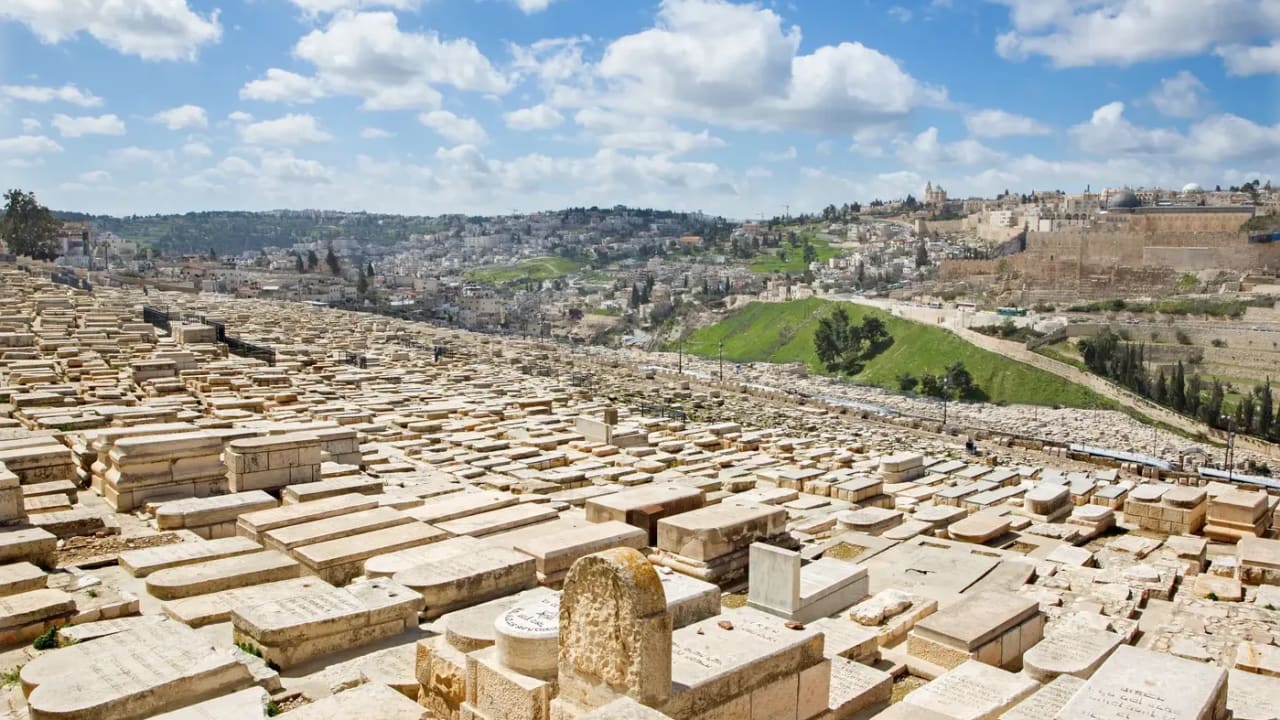
In about a year, burial sites in the Or Yehuda cemetery may run out. A year and a half remains in the Yarkon and Elad cemeteries, about three years in Tel Aviv and Rishon Lezion, and about four in Haifa – according to data presented in a petition filed this week with the High Court of Justice. Planning and constructing a new burial structure takes about six years, so even if work resumes tomorrow morning, a shortage of burial sites could be created for years.
The Forum of Hevra Kadisha Societies in Israel, together with five major societies in Tel Aviv, Jerusalem, Haifa, Rishon Lezion, and Petah Tikva, petitioned the High Court of Justice following the freezing of projects to construct about 40,000 new burial sites, valued at over half a billion shekels. These are projects in Tel Aviv and Haifa. In Jerusalem, additional projects to construct about 8,000 sites are in danger of halting, and contractors at Har Hamenuchot have already announced a slowdown and cessation of work.
Following the events of October 7, the state requires the societies in Tel Aviv, Jerusalem, and Haifa to hold thousands of vacant burial sites for emergencies, beyond the number required during routine times. This inventory is intended to enable burial in the event of a mass disaster, such as a severe earthquake. In the petition, the societies warn that the construction delay could impair their ability to maintain the inventory that the state requires them to hold.
According to the petitioners, the state obligates them to switch to high-density burial, which requires the construction of structures and tunnels at costs of hundreds of millions of shekels, without allowing them to raise the necessary money. One of the funding sources it determined is the sale of burial plots to people who purchase them during their lifetimes. The rates are based on costs from 1997, and have not been updated in accordance with the rise in construction and development costs.
The dispute over funding new burial infrastructure
The societies demand an update to the prices. In Tel Aviv, for example, it is proposed to raise the maximum price for purchasing a burial plot in life from about NIS 19,000 to about NIS 34,900, before the discounts set by law. In cases where cumulative discounts of about 40% are given, the price will rise from about NIS 11,400 to about NIS 21,000. Eligibility for free burial will not change. The money collected from the sale of plots, according to the petitioners, will be used to construct burial sites for the general public.
The draft order to update the prices was published for public comment in May 2026, after a lengthy preparation effort. On October 9, the deputy attorneys-general announced that there is no room to promote it at this stage, among other reasons due to the restrictions applicable during an election period. This despite the fact that the legal advisor to the Religious Services Ministry determined that the order could be promoted during this period as well.
In a letter sent by the director-general of the Religious Services Ministry on October 25, which was attached to the petition, he warned against stopping development and tunneling work and damaging the emergency burial inventory. The director-general clarified that the update was prepared before the elections and is not considered a policy change. According to him, "Every day of foot-dragging causes heavy damage to the burial sector and the public in Israel."
In the petition, filed through attorneys Asher Axelrod and Yael Zellinger, the High Court of Justice is requested to instruct the religious services minister to bring the order to the Knesset Internal Affairs Committee for approval. If the order is not promoted, the petitioners ask to cancel the obligation to establish high-density burial structures as long as funding has not been arranged, or to allocate land that will guarantee burial sites for the public.
The Forum of Hevra Kadisha Societies stated: "It is impossible to impose responsibility on the Hevra Kadisha societies for emergency preparedness, and in the same breath prevent them from accessing the resources to develop the required infrastructure. We ask the court to allow the completion of the professional process before the shortage becomes a national crisis. On the day of a disaster, God forbid, it will be too late to start planning and establishing burial sites."
No response was provided by the Religious Services Ministry.