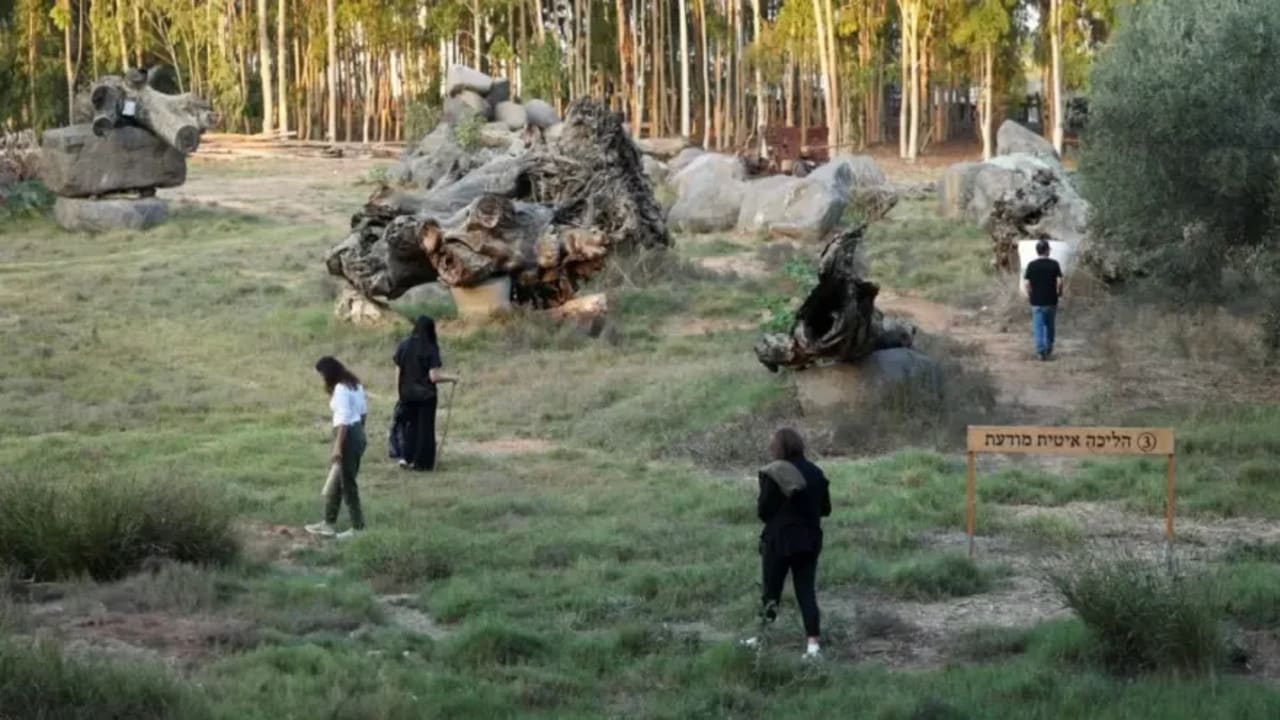
Forest medicine is a therapeutic practice and evidence-based guided medicine that encourages mindful, slowed-down, and guided stays in wooded areas to improve physical and mental health. A groundbreaking study, the first of its kind conducted in Israel and recently completed, sought to examine whether structured and guided intervention treatment in forest medicine could improve the condition of people coping with PTSD (post-traumatic stress disorder) and subsequently serve as a therapeutic option for many who deal with the syndrome on a daily basis with a direct impact on their lives. The study was conducted by "Forest Medicine Israel" led by Prof. Itamar Grotto, Dr. Efrat Danino, and the organization's CEO, Galia Ben-Haim.
As part of the study, conducted according to Defense Ministry criteria, 75 participants took part, all of whom are patients recognized by the Defense Ministry on military grounds, with about 77% of them coping with post-trauma stemming from combat during their military service. In addition, 81% of all study participants receive medication, and 83% receive ongoing medical care. In the study, which examined symptoms of the illness, anxiety, and sleep quality, participants were divided into two groups: One with 54 participants who received forest medicine intervention alongside their regular treatment, and a control group of 21 participants who continued their regular treatment without forest medicine intervention.
The study presents significant and statistically meaningful results regarding forest medicine intervention among PTSD sufferers. Overall, 70% of the participants showed a daily trend of improvement in the HRV index, which reflects the balance of the autonomic nervous system, compared to only 31% in the control group, alongside a dramatic decrease of 9.1 points in PTSD symptoms among the intervention group. Furthermore, an improvement of 7 points was shown in the Patient Health Questionnaire, a 54% improvement in the intervention group compared to only 7% in the control group, as well as an effect of the intervention even three weeks after the final treatment – meaning that forest medicine intervention is not merely reflected locally, but over time.
Dr. Efrat Danino, academic director, nurse, PhD in public health, researcher, and co-leader of "Forest Medicine Israel," explains: "The study reinforces the understanding that the forest has deep therapeutic potential and that structured treatment, professional accompaniment, and guidance carry great meaning. In general, and particularly in a unique group such as PTSD sufferers, we saw how a proper combination of forest, mindfulness, and an orderly therapeutic process can have a long-term impact not only on the feelings and personal experience of the patients. The statistical significance of the study's results showed beyond any doubt that the therapeutic intervention also affects objective physiological measures, including PTSD symptoms, stress, anxiety, and sleep quality. We have a great opportunity to bring hope for a healthier and better life to many who sacrificed of themselves in their daily coping with PTSD."