
A listener of my radio show shared that his wife is dieting with the help of ChatGPT and asked for my opinion. This is an excellent question: Because on one hand, it is an available, convenient, and very impressive tool, but on the other hand, when it comes to nutrition – our body does not always suit general answers, and the data we input is not always accurate.
Therefore, my answer is not "yes" or "no", but rather perhaps: For whom, how to use it, and when to be careful.
The chat can be a great aid, but it is not a magician, it is not a clinical dietitian, and most importantly – it cannot know things we did not tell it.
24/7 availability
The greatest advantage is availability. Unlike a professional, with whom you need to schedule an appointment, a chat is there at any hour.
If we ate dinner and want to understand roughly how much protein was in it, if we want an idea for a meal with what is in the refrigerator, if we are looking for a caloric substitute for something sweet, or if momentary emotional support is needed before opening the snack cupboard, it can help.
Sometimes the mere fact that there is "someone" to ask, even if it is a digital tool, reduces the feeling of loneliness and brings us back into framework.
Ideas and support
One of the things that can help in a weight loss process is planning.
Those who arrive home hungry without an idea for a meal will usually not start looking for a complex recipe. Here, a chat can be very efficient. You can write to it: "I have cottage cheese, eggs, vegetables, tuna, and light bread, give me three options
for dinner", and receive ideas within seconds.
You can ask it to build a shopping list (which might not necessarily suit us, but we can read it and then decide), suggest low-calorie snacks, explain why a certain meal was not satiating, or suggest a way to improve an existing menu.
Studies from recent years show the potential that artificial intelligence has in the field of nutrition. For example, a review published in Future Internet found that in some of the studies, ChatGPT gave nutritional advice that was rated as compliant with dietary guidelines; in parallel, limitations were found in areas such as the personalization of the menu, macronutrient balance, and caloric accuracy.
That is to say, it can be a good aid, but not always accurate enough when personal and complex planning is required.
A study published in Nutrients in 2025 also examined the ability of various chatbots to build weight loss menus. The researchers found that the tools succeeded in "certain cases" to build reasonable menus, but there were also gaps in caloric accuracy and nutritional quality, and therefore they emphasized the need for professional supervision.
That is to say, it can be a good aid, but not always accurate enough when personal and complex planning is required.
The main problem: We do not always report correctly
Here comes the most important part: If you ask the chat to estimate what we ate, it depends entirely on what we told it. If we wrote "I ate a salad with schnitzel", it can give a general estimate.
But what was in the salad? One teaspoon of oil or five teaspoons? Were there nuts there? Feta cheese? Ready-made dressing?
And what about the schnitzel, was it baked or fried? Small or large? Thin or thick? With regular breadcrumbs or a thick coating that absorbed oil?
Exactly here is where the mistakes begin. Not because the chat "erred", but because the data is not accurate enough.
Many people forget to mention the oil in the pan, the dressing in the salad, the tastings while cooking, the bite from the child's cake, the spoonful of rice they ate while standing, or the "just a few almonds" next to the coffee.
Each of these things seems small, but together they can add several hundred calories a day. In a weight loss process, a few hundred calories are sometimes the difference between a nice loss and a feeling that "I am doing everything right and not losing weight".

Taking a picture of the food does not tell the whole story
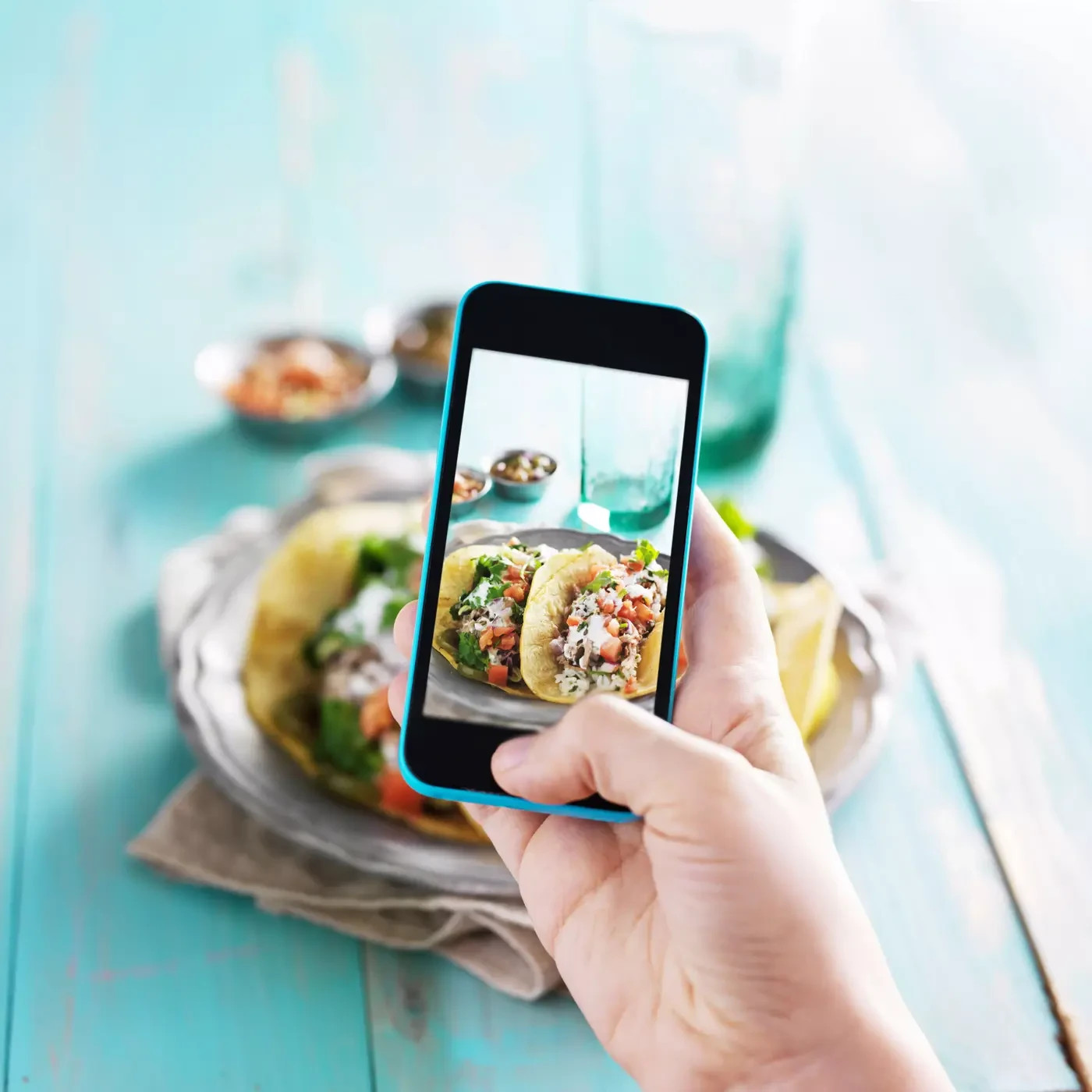
In recent years, people have started uploading pictures of the plate and asking for a calorie estimate. This sounds very convenient, and there truly is an advantage to it: The chat can identify some of the foods, estimate portion size, and give a general direction. But it is important to understand the limitation. From one picture, it is not always possible to know how the food was prepared.
A schnitzel in a picture can look very similar whether it is baked or fried, but the caloric and nutritional difference is very large.
A salad can look "healthy", but if it contains five teaspoons of oil, a sweetish dressing, seeds, and high-fat cheese, it is already a completely different meal.
Pasta can also look innocent, but the difference between a tomato sauce without oil and cream, butter, and cheeses is immense.
The study published in Nutrients also examined the ability of ChatGPT-4 to estimate nutritional values from pictures of meals, and found that there is potential, but also clear limitations, especially when dealing with complex dishes, portion sizes, and ingredients that are not visible to the eye.
OpenAI itself also emphasizes that ChatGPT might make mistakes and that it is advisable to check important information, and especially not to rely on it as a substitute for professional advice in complex medical or health fields.
Not looking only at calories
With all the limitations, the chat has an important advantage: It can help look at food not only through calories.
You can ask it how much protein is in a meal, whether vegetables are missing, whether the menu is too low in fiber, whether there is enough calcium, iron, or omega-3, and how to improve the meal without significantly increasing it. This is an important point, because weight loss is not just a caloric calculation.
Those who eat too little protein, too little fiber, or too little vegetables might be hungrier, more tired, and find it difficult to persist.
For example, if someone writes that they ate coffee and a cookie in the morning, pasta at lunch, and toast in the evening, the chat can show them that the menu might not look "huge", but it is low in protein and vegetables.
This is an insight that can help a lot. Instead of just saying "eat less", you can ask it to suggest how to make that same day more satiating: Add yogurt, an egg, tuna, cheese, legumes, or vegetables, according to preferences.
A response that is too general does not always suit a specific person
Nutrition is a personal field. The same menu can suit one person and not suit another.
There is a difference between a young woman who trains a lot, a man with diabetes, a menopausal woman, a person with kidney problems, someone who is pregnant, those who take certain medications, or those who suffer from emotional eating. A chat can give general information, but it will not know what we did not tell it – if we forgot to accurately enter, in addition to the menu, also blood tests, medical history, medications, eating patterns, preferences, sensitivities, emotional state, and ability to persist.
Therefore, in cases of diabetes, kidney diseases, eating disorders, pregnancy, breastfeeding, bowel diseases, complex medication treatment, or large weight loss, it is not advisable to rely only on a chat.
It can be used to get organized, understand concepts, get ideas and support, and phrase questions, but not as a substitute for personal guidance.
How to use it correctly?
First of all, remember that the best way to use the chat is to be as accurate as possible.
Do not write "I ate a salad", but rather "I ate a salad with two tablespoons of olive oil, half an avocado, 50 grams of feta cheese, and a slice of bread". Do not write "schnitzel", but rather "fried schnitzel in 8 teaspoons of oil, weight of chicken breast before frying 180 grams" or "frozen ready-made baked schnitzel". Do not forget sauces, tastings, snacks, sugary drinks, nuts, oil in cooking, and quantities.
Dieting with ChatGPT can be an excellent aid for the process, provided that one understands what it is and what it is not.
It can give ideas, help in planning, estimate nutritional values, remind us to integrate protein and vegetables, and suggest solutions at moments when it is easy to fall into an unplanned snack.
On the other hand, it depends entirely on the accuracy of the data given to it, does not always know how to identify hidden ingredients, cannot know how much oil was in the pan, and does not replace a professional in medical situations or complex processes.
And because we too do not always know what data needs to be given, what is important and what is less so, and what we are even supposed to ask regarding the nutritional value... I think that the work of nutritionists and dietitians is really not going to disappear anytime soon.