
On September 27, 1814, French philologist Jean-Francois Champollion publicly announced at the Académie royale des Inscriptions et Médailles that he had successfully decoded the Rosetta Stone’s hieroglyphs.
Before Champollion’s success, several other scholars attempted to decode the symbols, including Swedish diplomat Thomas Akerblad and British polymath Thomas Young.
Young linked the phonetic hieroglyphs for the royal name Ptolemy and matched 218 Demotic words to about 200 hieroglyphs, but his attempt failed with the assumption that only royal names were phonetic, a limit pointed out by French researcher Christian Leplante.
Champollion, however, showed that the signs were phonetic letters that could spell out the entire language. He verified the alphabet he had uncovered against other monuments, including the base of the the Philae obelisk in Britain.
His discovery allowed researchers to read ancient Egyptian texts and inscriptions for the first time.
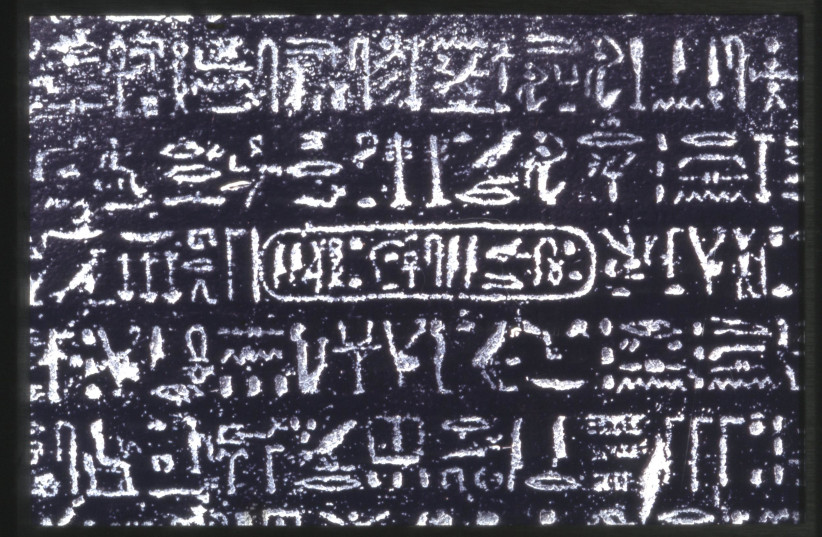
Soldiers in Napoleon's army are believed to have discovered the Rosetta Stone in Rashid, one of the Nile’s port cities, in 1799. Its name, Rosetta, comes from the French name of the city.
After the French defeat by Ottoman and British forces in 1801, the stone went to the British Museum under the Treaty of Alexandria, where it has stayed.
It is dated to over 2,200 years old, marking the first anniversary of the coronation of Ptolemy V, who reigned between 204 and 181 BCE.
Stone bears three different languages
The Rosetta Stone is part of a larger stone stele and is inscribed with an official decree, carved in three different languages: two forms of Egyptian script, hieroglyphs and Demotic, as well as ancient Greek.
It states that the priests of a Memphis temple confirmed Ptolemy V's status as a divine ruler, even though he was Macedonian rather than Egyptian.
Twenty-nine variations of the decree have been discovered across Egypt, including three near-exact copies of the one carved into the Rosetta Stone and several very similar ones dating to the reigns of Ptolemy III, IV and VI.
Twenty-two of the decrees remain in Egypt.
To mark the occasion, Egypt’s Tourism and Antiquities Ministry announced that several museums would be showcasing a unique selection of artifacts related to the ancient Egyptian language and its scripts.