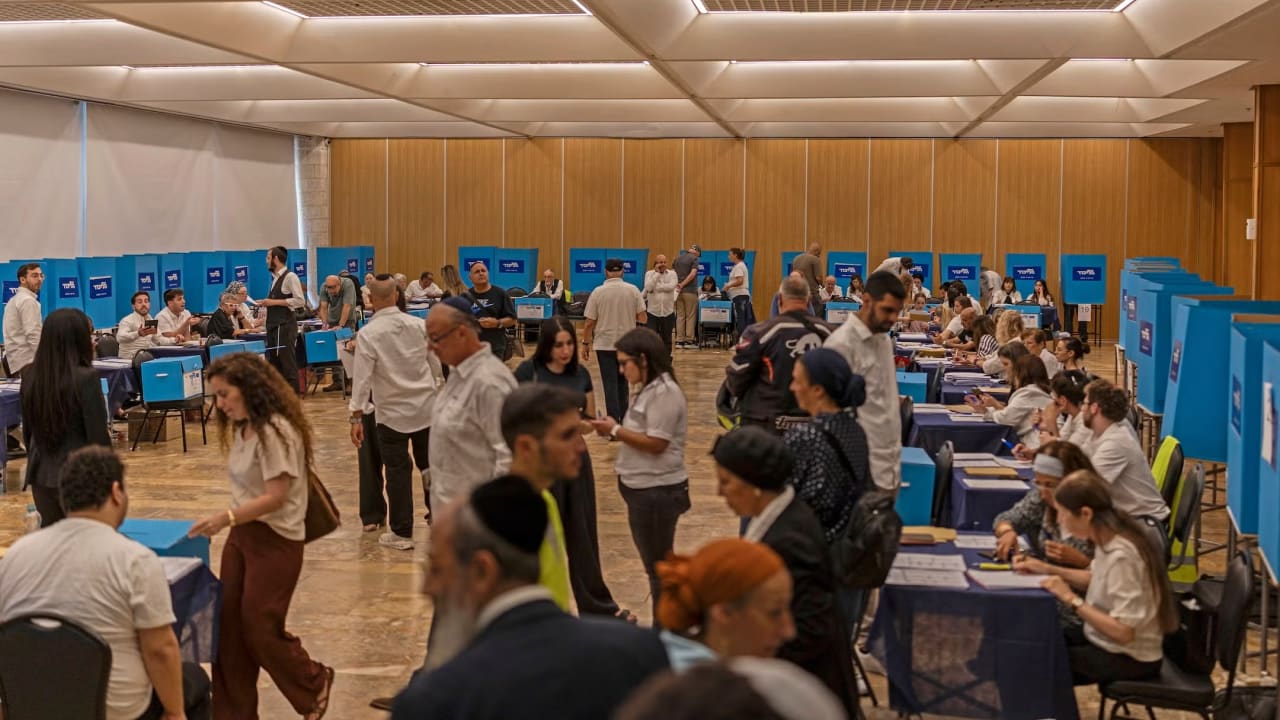
The High Court of Justice will hear a Likud petition on Wednesday seeking to overturn a ban on party representatives reporting in real time on which voters have cast ballots.
The case could reshape parties’ Election Day turnout operations less than two months before the October 27 election, particularly their ability to identify supporters who have not yet voted.
Justices Yael Willner, Alex Stein, and Khaled Kabub will hear the petition, which will be livestreamed.
The issue is not how anyone votes, which remains secret. The dispute concerns whether polling-station committee members and observers appointed by political parties may send campaign headquarters identified information showing that a particular voter arrived, cast a ballot, and, in some cases, when and at what type of polling station.
Central Elections Committee chairman and Supreme Court Deputy President Noam Sohlberg prohibited the practice on August 4 and rejected Likud’s request for reconsideration on August 16.

Justice Sohlberg says a person's vote is personal
Sohlberg ruled that information about a person’s participation in the vote and the circumstances surrounding it is personal information and cannot be transferred from the polling station for party purposes without legal authorization.
Party representatives inside polling stations, he wrote, perform an official electoral role: they receive information to administer and supervise the vote, not to provide campaigns with data for political operations.
The prohibition applies to every party. It concerns the transfer of the information itself, regardless of whether it is sent through an application or by another method.
For several election cycles, parties have used applications to mark voters as they arrived. Campaign headquarters could then concentrate calls, messages, and visits on likely supporters who had not yet voted.
Central Elections Committee outlines Election Day transparency plan
As an alternative, the Central Elections Committee will publish the turnout rate for every ordinary polling station at least four times on Election Day. The figures will show how many people have voted, but not their identities. The arrangement was introduced after Sohlberg rejected Likud’s request for reconsideration.
Likud argues that Sohlberg imposed a new and unprecedented restriction after the election campaign was underway, despite a practice that had operated openly for years. It says parties planned their Election Day operations in reliance on real-time reporting and that the change will weaken their ability to bring supporters to the polls.
The party also disputes Sohlberg’s authority. It argues that, while he may administer the election, he cannot use that administrative role to determine whether party representatives have violated privacy law. Likud is asking the High Court either to cancel the prohibition or delay its application until a future election.
The Degel Hatorah faction of United Torah Judaism argued that identified reports serve not only voter mobilization but also help parties detect possible errors, duplicate voting, and unusual activity. It said publishing aggregate turnout figures four times a day would provide only delayed and incomplete oversight.
Sohlberg and the state maintain that polling-station information is entrusted to officials for administering the election and may not be repurposed for party databases. They dispute the argument that transferring identified voting information to political parties is necessary for representatives to supervise the election.
The Central Elections Committee, the attorney-general, and the Privacy Protection Authority have asked the court to dismiss the petition. They argued that Sohlberg did not change the law, but rather clarified restrictions already contained in privacy and election legislation.
In their position, years of unchallenged conduct cannot create a legally protected expectation that a practice they regard as unlawful will continue. They also argued that storing and combining the information digitally increases both the privacy intrusion and the associated data-security risks.
The Privacy Protection Authority has separately told parties that it intends to enforce the prohibition.
Attorney Shahar Ben-Meir, whose request prompted Sohlberg’s original decision, and Tel Aviv University’s Privacy Clinic also opposed the petition. They argued that combining identified, real-time turnout data with party databases creates a significant privacy intrusion and that the election chairman was required to consider that risk when regulating officials inside polling stations.
Opposition parties back keeping ban on joint election lists
Blue and White, Yesh Atid, Labor, and Yashar have likewise supported leaving the prohibition in place. Yesh Atid’s filing also relied on a joint position it previously submitted with B’Yachad during the reconsideration proceeding.
Labor argued that Likud could not claim protected reliance on a practice whose legality had been under review since January. It said the party assumed a commercial risk by entering a campaign-system agreement while the proceeding was pending and without making the agreement dependent on its outcome.
Yashar argued that preventing established parties from obtaining identified polling-station data could also reduce their structural advantage over newer competitors.
Unless the High Court intervenes, Sohlberg’s prohibition will remain in force for the October 27 election.