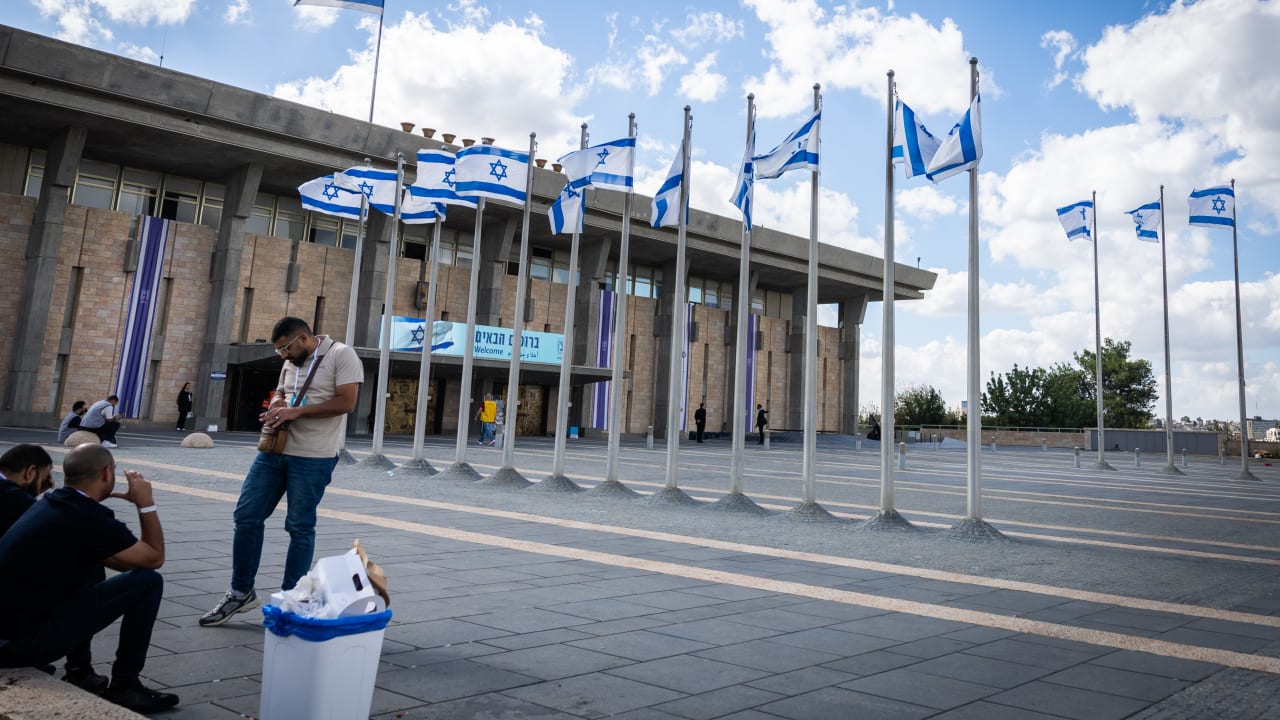
Israel’s inconclusive October 27 election could produce another vote or a short-lived government, according to political scientist Jack Drassinower, a lecturer at the Herzl Center for Zionist Studies in Jerusalem, who sees little prospect of a durable coalition emerging from negotiations among parties divided over whom they are willing to govern with.
For more stories from The Media Line go to themedialine.org
“I think the most likely outcome at this point could be another election,” Drassinower told The Media Line. The alternative, he said, could be a coalition led by Gadi Eisenkot with outside support from Arab parties, “but one that might last only a very small number of months.”
Drassinower expects Netanyahu to approach opposition figures, particularly former prime minister Naftali Bennett and Yisrael Beitenu leader Avigdor Liberman. He suggested that Netanyahu could offer to share the premiership in exchange for their participation.
“Netanyahu’s strongest bargaining chip is a rotating premiership,” he said.
Such an arrangement could divide the opposition, but both Bennett and Liberman have publicly rejected serving in a Netanyahu-led government. Liberman has also ruled out governing with the ultra-Orthodox parties or depending on Arab-party support.
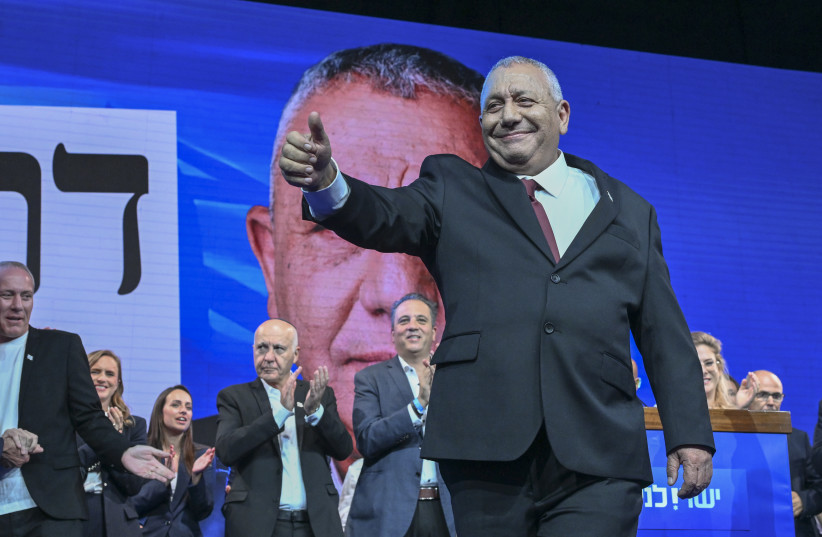
Complications for Eisenkot's chances in establishing a government
In statements following the election, Liberman reaffirmed that his acceptable coalition would consist exclusively of Zionist parties, potentially including Likud without Netanyahu. He also rejected supporting a minority government, even from outside the coalition.
Those restrictions complicate Eisenkot’s efforts to assemble an alternative government.
“The opposition began by saying it would not join any coalition with Netanyahu, or work with Arab parties or the ultra-Orthodox,” Drassinower said. “So, the question is: with whom?”
The opposition’s positions are not uniform. The Democrats, led by Yair Golan, have expressed openness to cooperation with Arab parties, while Bennett and Liberman oppose such an arrangement.
The Arab parties’ record representation gives the dispute practical importance. Ra’am won eight seats, while the Joint List secured 11. Adding Ra’am alone to the opposition’s 48 would produce 56 seats, short of a parliamentary majority. Including both Arab lists would raise the total to 67, provided all four opposition parties agreed.
That calculation becomes more difficult if Liberman’s seven lawmakers refuse to participate. The remaining opposition parties and both Arab lists would command 60 seats, leaving them without an absolute majority.
Drassinower nevertheless argued that Eisenkot could not dismiss cooperation with Arab parties. He interpreted their electoral gains partly as a demand for greater political inclusion, alongside frustration over crime and insecurity in Arab communities.

Arab power in Knesset cannot be ignored
“The opposition has to understand that it cannot ignore the Arab parties’ 19 seats,” he said.
Any arrangement involving their support would likely require negotiations over policy priorities, government spending, and measures addressing conditions in Arab communities.
Drassinower also raised a more speculative possibility: Netanyahu seeking Ra’am’s support. Its eight seats would bring his existing bloc to exactly 61 if all its current partners remained together. Such an agreement would face substantial political obstacles, and Drassinower did not suggest that negotiations were underway.
The coalition calculations have also been affected by Shas’ considerable electoral losses. The ultra-Orthodox party received 299,506 votes, down from 392,964 in 2022, and will hold six seats instead of 11. The decline of 93,458 votes represents nearly a quarter of its previous support. United Torah Judaism, by contrast, retained its seven seats.
Drassinower attributed part of Shas’ decline to its increasingly restrictive position on military conscription, which he believes has alienated some traditional Sephardic supporters who do not identify with the ultra-Orthodox community’s opposition to military service.
“Perhaps the clearest example is its opposition to conscription,” he said.
According to Drassinower, Shas initially defended exemptions for young men studying in religious institutions but subsequently adopted a broader position opposing conscription among the ultra-Orthodox population. He argued that this troubled more moderate supporters, including people who “work, study, and serve in the army.”