
Israel should be able to produce its own JDAM (Joint Direct Attack Munition) bombs en masse within two years, The Jerusalem Post has learned.
The development serves to revolutionize Israel’s warfare capabilities.
Under orders from then-defense minister Yoav Gallant, and with recommendations from the commission of former justice Jacob Turkel, Israel started producing more of its own bombs in late 2024. Israel has relied far more on the US for such weapons during crises for decades.
In May 2024, the Biden administration imposed a partial arms freeze on certain bombs to Israel over differences related to the IDF’s invasion of Rafah. Initially, the idea was for Israel to become more independent in producing “dumb” bombs.
But that was only the beginning of the process of making Israel more independent in weapons production, particularly regarding munitions. This process accelerated and expanded significantly in 2025-2026, eventually focusing on producing JDAMs and smarter bombs.

Israel already produces its own kits that convert “dumb bombs” into precision weapons, but it is not anywhere close to the necessary volume that it needs to be considered independent.
JDAMs convert bombs into precision-guided munitions
The JDAM is a guidance kit that converts unguided, or “dumb,” bombs into precision-guided munitions (PGMs) that can be used in all weather conditions, including those that would render dumb bombs ineffective.
On January 7, 2025, the Defense Ministry signed two major agreements with Elbit Systems, totaling about NIS 1 billion, as part of a strategic effort to strengthen the IDF’s self-sufficiency and operational readiness both in munitions and in raw materials.
In November, the Defense Ministry said more than 120,000 tons of military equipment, munitions, weapons systems, and protective gear had been transferred to Israel via 1,000 aircraft and about 150 maritime vessels, mostly from the US.
Amir Baram, who had served as the IDF’s deputy chief of staff, became director-general of the Defense Ministry in March 2025. Over the past two years, he said, the ministry “has led a tremendous effort to ensure the supply of weapons, equipment, technology, and everything required to enable the IDF to fight and prevail. The 1,000th aircraft that landed today represents another crucial link in the strategic supply chain for the State of Israel.”
Baram said it was critical to pursue “two parallel tracks: on the one hand, strengthening Israel’s defense production base to ensure manufacturing independence, and on the other hand, strengthening cooperation and political and defense relations with our allies around the world to maintain such an airlift, both in routine and emergencies, and to further strengthen the IDF’s capabilities.”
This past January, the Defense Ministry said it had issued a multi-year order for air munitions manufactured by Elbit Systems valued at about NIS 570 million.
“This air munitions deal joins a series of multi-year, force-building agreements currently being advanced across air, land, and additional domains,” Baram said at the time. “These agreements will enable inventory replenishment and procurement for years ahead, while investing in the expansion of our defense industrial base.”
“This will enhance the IDF’s readiness for a challenging security decade, support increased defense exports, and strengthen the economic resilience of Israel’s defense industries and the broader Israeli economy,” he said.
Munitions production ramped up during war with Lebanon, Iran
During the wars with Iran and Lebanon in March, Baram said there would be additional munitions production with Elbit.
“The Defense Ministry’s central focus... is aerial munitions,” he said. “Months of preparation and early readiness have enabled the IDF to operate with virtually no constraints in Iran and Lebanon.”
“At the same time, we are now working to replenish all munitions expended to be prepared for any scenario,” he added. “The decisions we made to expand and accelerate production lines in Israel before the operation will now allow us to take production rates to the next level.”
Baram praised Israel’s “distinctive integration between the IDF, the Defense Ministry, and the defense industries that enables the rapid translation of operational needs and battlefield lessons into real-time modifications and upgrades, creating exceptionally fast feedback loops.”
He did not specify where the money went to and when. Nevertheless, Israel’s continuous funding to achieve weapons independence leaves room for emphasis on different weapons at different times.
The question is now: Where did Israel get the money for its surge of homegrown munitions?
At some point, the Defense Ministry lacked the funds to finance the rapid increase in munitions production, nor could it afford to increase Arrow 3 interceptor production, the Post has learned.
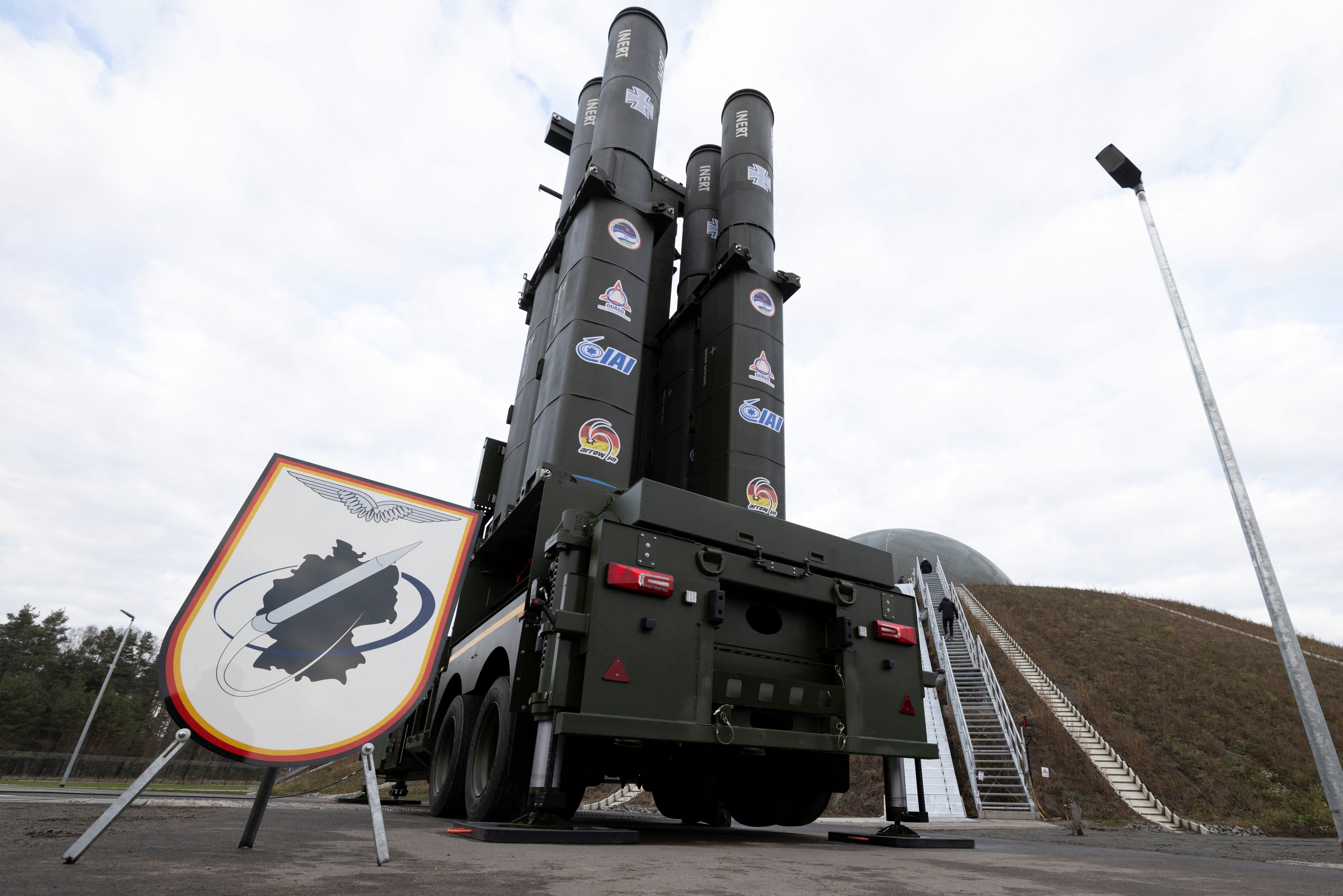
Defense Ministry increased Arrow production funds through sales to Germany
This was exacerbated by disputes with the Finance Ministry over the budget, resulting in insufficient or delayed funding.
The only way the Defense Ministry could get the funding it needed was by its quick and creative use of the Arrow sale to Germany. The influx of billions of dollars from the sale gave the Defense Ministry enough funding to increase its Arrow production.
In fact, these funds enabled an increase in the development of locally produced munitions and exponentially increased the number of Arrow interceptors produced by two to four times.
Several Israeli media outlets criticized Israel for sending Arrow interceptors to Germany during the war, when Israel was carefully budgeting the use of its remaining interceptor supply. Despite the criticism, only a very small percentage of Arrow interceptors went to Germany, the Post understands.
This means that the deal essentially provided Israel with dozens or more interceptors that it never would have had.