Hearings began at the High Court of Justice on Thursday over disqualification petitions against all Arab-Israeli representation in the Knesset: the Joint List, Ra’am, and Joint List candidates Balad chairman Sami Abu Shehadeh and Ofer Cassif.
The court is hearing these cases after the Central Elections Committee voted earlier this month to disqualify them from the election run, and all petitioned against it.
All the cases arise under Section 7A of Basic Law: The Knesset, which permits a candidate or list to be barred for rejecting Israel as a Jewish and democratic state, inciting racism, or supporting armed struggle by an enemy state or terrorist organization.
A nine-justice panel is hearing the case: Supreme Court President Isaac Amit, and Justices Dafna Barak-Erez, Yael Willner, Alex Stein, Khaled Kabub, David Mintz, Ofer Grosskopf, Gila Canfy-Steinitz and Yechiel Kasher.
Case heard by nine-justice panel as protesters gather against Ben-Gvir
Outside the courthouse, protesters shouted, “Fascism will not come here,” and “Ben-Gvir is a criminal.”
Amit noted the high tensions surrounding the issue at the start of the hearing, calling it “an open nerve of Israeli society.”
Ra’am and the Joint List are appealing decisions against entire lists. The decisions against Cassif and Abu Shehadeh were transferred automatically because a committee vote barring an individual candidate cannot take effect without Supreme Court approval.
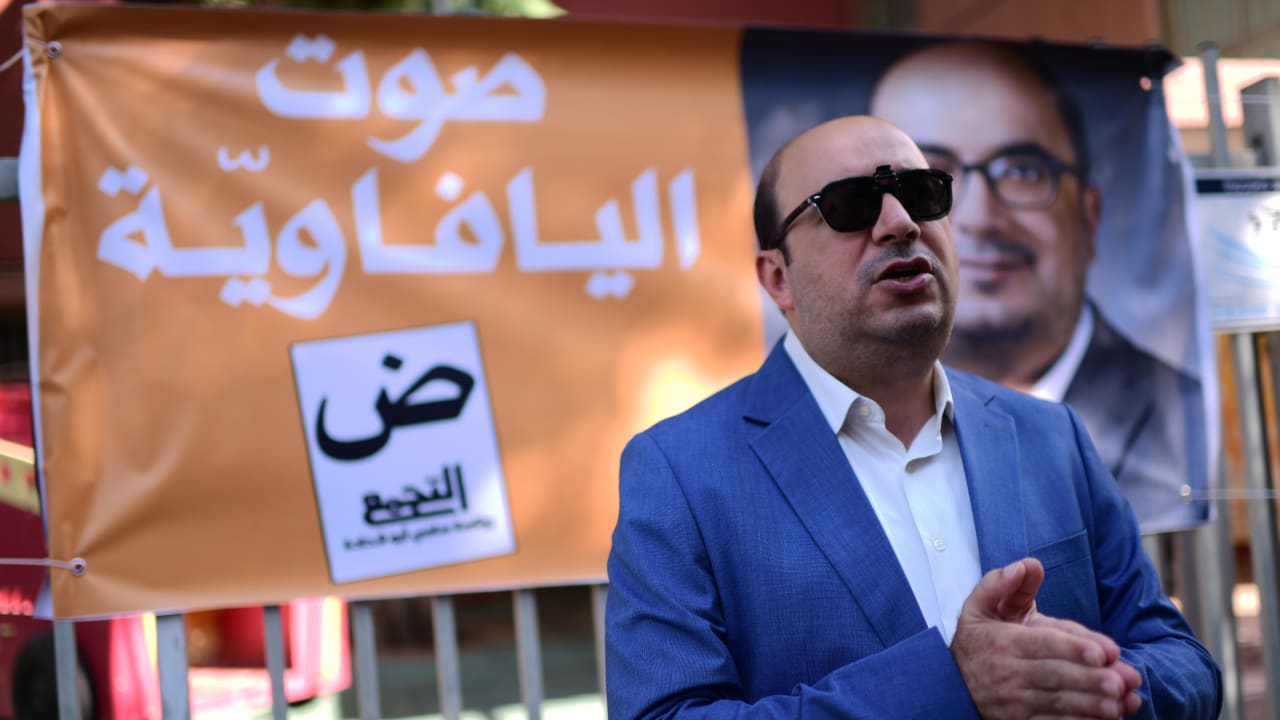
Sami Abu Shehadeh
The committee voted 30-4 to disqualify Abu Shehadeh, with Sohlberg also supporting the decision, bringing the result to 31-4.
Baharav-Miara and State Attorney Amit Aisman urged the justices on Tuesday to approve it on the grounds of support for armed struggle, focusing primarily on an article he wrote on October 8, 2023, while the Hamas attack was still unfolding.
Abu Shehadeh maintains that the article did not endorse the attack and was written before its full scale was known.
Ben-Gvir brought what he presented as more examples of statements or attributes to Abu Shehadeh in which he either didn’t unequivocally condemn the massacre or expressed sentiments “against the occupation.”
Ben-Gvir argued that Abu Shehadeh never issued an unequivocal condemnation, only that he told the Central Elections Committee hearing, when it reached that point, three years after the article was published, that he is “against the killing of innocents.”
Ofer Cassif
The committee voted 19-5, with two abstentions, to bar Cassif on the grounds that he rejects Israel as a Jewish and democratic state and supports armed struggle against it.
Cassif argues that the statements and political activity cited against him, including support for international proceedings and sanctions against Israel, cannot be equated with support for armed violence.
Baharav-Miara opposed his disqualification.
The Joint List
The committee voted 18-5 to disqualify the Joint List, with one abstention. The list has called the decision political persecution directed at Arab representation.
Ra'am
Ra’am’s appeal argues that the three applications against it, filed by Otzma Yehudit, Likud, and the Choosing Life Forum, relied largely on allegations and evidence considered in previous unsuccessful disqualification proceedings.
The applications sought to link Ra’am with the southern branch of the Islamic Movement, Aid 48, and other associations accused of transferring assistance to entities connected to Hamas. Ra’am argues that these are indirect organizational links and that the applicants did not produce clear evidence that the list itself supports armed struggle.
It also argues that much of the material consisted of media reports and internet publications rather than evidence concerning the current list, its platform, or its candidates. Ra’am cited its participation in the Bennett-Lapid coalition and the addition of former police major-general Yoav Segalovich to its slate as evidence of its present political course.
Baharav-Miara opposed Ra’am’s disqualification, saying the evidence did not meet the Supreme Court’s stringent standard. Eighteen committee members nevertheless voted to bar the list, with one abstention.