
Yom Kippur is a personal and solitary experience. We descend into the chambers of our personality and search for what we spend the year avoiding. We confront weaknesses we would rather ignore and habits we have learned to excuse.
We peel away layers of ego, conceit, self-deception, and artifice, stripping ourselves down to something exposed, genuine, and vulnerable.
Without our usual protections, we search for painful truths and hope to summon the courage to become different.
Yom Kippur is the night journey of the soul. For one day, distractions recede, and we confront who we are, what we have failed to become, and the brevity of our lives against the backdrop of eternity. Few images capture Yom Kippur more powerfully than a person bent over a machzor (prayer book), quietly reciting its catalogue of sins.
Yet Yom Kippur is also a time for collective repentance. For the first time in 2,000 years, we live as a sovereign Jewish nation, and just as individuals must examine themselves, so must a nation.
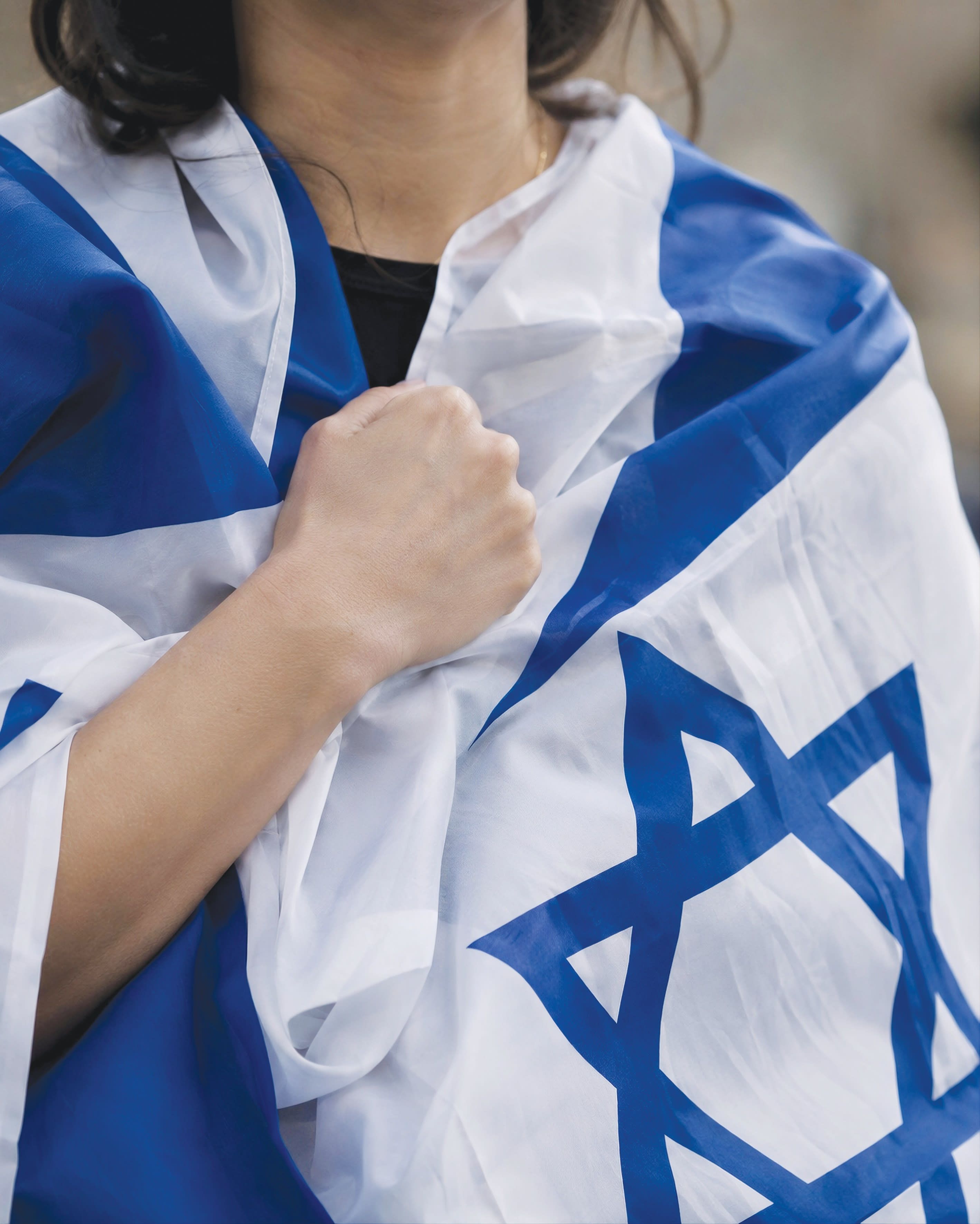
The past three years have tested us severely, and we have responded with faith, courage, and resilience. But admiration for what we have achieved cannot exempt us from honest self-examination. As a people, we too have sins to confess.
Collective vidui (confession) is inevitably personal and subjective. Yet there are failures that we as a people should be willing to confess on Yom Kippur and address through our collective teshuva (repentance).
The sin of spiritual bewilderment
One of the sins listed in the machzor is timhon levav, a bewilderment or confusion of the heart. During these years, we have sometimes wondered obsessively about God’s decisions and His providence, without allowing sufficient faith to steady us.
Under the strain of war and uncertainty, pessimism about the future of our people and of the State of Israel has crept in, weakening confidence in a destiny that God has promised us. We have witnessed remarkable victories, made possible by the courage and heroism of our defense forces.
Have we also sufficiently thanked God and recognized His hand in those achievements?
The sin of historical inattention
We are living through history. The October 7 Hamas-led massacre is an event that will shape, and should shape, the remainder of our lives. We will tell its story to future generations, much as Holocaust survivors were charged to preserve what they witnessed.
Yet it is possible to live through history without absorbing its meaning. We can remain absorbed in our own stories even while the larger story of Jewish history is hurtling forward around us.
Have we sufficiently taken the measure of this moment, or have we retreated too quickly into our own private lives?
The sin of numbness
Our society is exhausted. Three years of war have left us carrying grief, anxiety, and disrupted lives. The news cycle has been dizzying, with one major event barely settling before another arrives. Being tired is no sin. But prolonged exhaustion can quietly become numbness.
Have we begun, simply from sheer fatigue, to stop feeling what once would have shaken us?
The sin of taking sacrifice for granted
The burdens of this war have not fallen equally. Some have endured losses and sacrifices almost impossible to imagine. Their heroism can never become part of the background scenery of war. Bereaved families, wounded soldiers, reservists and their families, and everyone who has carried a heavy burden deserve our gratitude, compassion, and support.
Have we embraced them with the love they deserve?
We must also be extraordinarily careful when speaking about their experiences. Pain is intensely personal, and even well-intentioned words can wound when they are careless or insufficiently sensitive.
Have we always chosen our words carefully enough? Have we sometimes spoken too casually about sacrifices we ourselves were not asked to make? And have we ever diminished someone’s pain simply because others have suffered more? Suffering does not have to be the greatest suffering to deserve our sympathy.
The sin of ideological overconfidence
The war and its aftermath have resurfaced tensions already simmering within our nation. We have slipped back into some of the social strife and divisiveness that troubled us before October 7. Positions have hardened around questions that touch the heart of Jewish identity and the meaning of life in the modern State of Israel.
Conviction is necessary, particularly when the issues are serious. But conviction can also harden into overconfidence. We should ask whether we have left enough room for the possibility that our positions may be mistaken, or at least incomplete. Have we rushed to defend our convictions without examining their weaknesses and limitations?
Matthew Arnold quotes Bishop Wilson’s warning that we should follow our “best light,” but also take care that our “light be not darkness.” A measure of intellectual humility would not erase our convictions, but it might soften some of the divisions battering our society.
The sin of reckless language
Even amid profound ideological divisions, our language demands greater care. The issues dividing us are painful and touch deeply held values. Too often, though, we escalate rather than speak with restraint, respect, and nuance.
At times our language has become outrageous. Calling another Jew a Nazi displays historical myopia and is deeply disrespectful to Holocaust victims. A Jew who can call another Jew a Nazi has revealed a profound rupture in his own Jewish identity, peoplehood, and historical consciousness.
That historical crime corrupts anything further he has to say on the subject and renders it irrelevant.
Similarly, casually branding another Jew an antisemite distorts both Jewish history and the bonds connecting us as a people. We can believe another Jew’s position is profoundly mistaken, even dangerous to the Jewish future, without reaching for language that casts him outside our shared story.
Language, language, language. Perhaps no failure has contributed more to the escalation of our internal divisions. Words can intensify conflict and leave wounds long after the argument has ended.
The sin of forgetting our shared destiny
We conclude Yom Kippur by dreaming of L’shanah haba’ah b’Yerushalayim, longing for the day when the Jewish people will gather in a redeemed Jerusalem. That shared destination should shape the way we look at one another now.
Despite our differences, we share a common past and destiny. When we forget that, we begin to treat one another as if we do not belong to the same people. Even when we disagree deeply, we remain partners in the same covenant and travelers toward the same redemption.
As we bend over the pages of the machzor and recite our catalogue of private sins, perhaps we should also imagine another book open before us: the book of Jewish history. We are living through one of its most consequential chapters, and we are helping to write it.
Some of the sins that belong to this book are not found explicitly in the machzor. They are written into the way we live our moment: how we speak, how we disagree, how we carry the pain of others, how we recognize God’s hand, and how faithfully we remember our shared destiny.
On Yom Kippur, God examines the hidden chambers of each individual heart. Perhaps He also examines the character of the people we are becoming together, and the way we are writing this chapter of His people’s history. ■
The writer is a rabbi and educator at Yeshivat Har Etzion (Gush). Find his latest book, Echoes of Rashi: Bereishit at mtaraginbooks.com.