Iran adopted a layered strategy of deterrence, survivability, and controlled escalation, designed to offset conventional military asymmetry vis-à-vis Israel and the United States.
Over the past two decades, the Islamic Republic has invested heavily in hardening, dispersal, and redundancy. Critical elements of its missile and drone infrastructure are housed in deeply buried facilities engineered to withstand precision strikes and ensure second-strike capability.
This physical protection is complemented by organizational decentralization: command-and-control structures within the Islamic Revolutionary Guard Corps (IRGC) and affiliated units are designed to function under conditions of leadership disruption, thereby reducing vulnerability to decapitation strategies.
Iran’s military strategy is fundamentally a response to the conventional gap, the recognition that its traditional air force and navy cannot compete with the technologically superior forces of the United States and Israel. In response, the Islamic Republic has adopted a layered strategy of deterrence, survivability, and controlled escalation.
Tehran has moved beyond mere defensive posturing toward a doctrine of Active Deterrence in the last two decades, which seeks to prevent conflict by making the cost of an attack on Iran prohibitively high for the aggressor. A central pillar of Iranian doctrine is asymmetric warfare, operationalized through a combination of its own capabilities and a network of regional partners.

Rather than relying on direct, large-scale confrontation, Iran has cultivated an “axis of resistance,” comprising the Ba’ath regime in Syria, Hamas in Palestine, Hezbollah in Lebanon, Shi’ite militias in Iraq, and the Houthi movement in Yemen.
Iran lost Syria for the time being, but the other parts of the axis are active. This network enables Tehran to project power indirectly, impose costs across multiple theaters, and maintain plausible deniability, thereby complicating adversaries’ response calculus.
Equally important is Iran’s deliberate development of graduated escalation options.
Its expanding arsenal of Short Range Ballistic Missiles (SRBM) such as Shahab 1, Shahab 2, Fateh 110 (solid fuel, widely deployed), Fateh 313 (improved Fateh variant), Zolfaghar, Qiam 1, and Dezful (extended range Fateh family); Medium Range Ballistic Missiles (MRBM) including Shahab 3, Emad, Ghadr 1/Ghadr 110, Khorramshahr, Sejjil (solid fuel, two stage), Kheibar Shekan, and Fattah 1 (hypersonic glide vehicle claim), and cruise missiles such as land attack cruise missiles (LACM), Soumar (long range, Kh 55 lineage), Hoveyzeh (improved Soumar family), Ya Ali, and Abu Mahdi (dual purpose land attack/anti ship).
Iran also operates one of the largest and most diverse unmanned aerial vehicles (UAVs) fleets in the Middle East. Iran has employed swarm drone tactics, saturation missile fire, and coordinated multi-front pressure to overwhelm defensive systems and stretch adversaries’ resources. The American demand to dismantle its arsenal is a non-starter. Iran will never agree to this.
Iran has escalated the conflict by internationalizing it geographically. Attacks on shipping lanes, energy infrastructure, and targets in Arab Gulf states reflect a strategy aimed at widening the theater of confrontation and raising the global economic stakes.
How Iran uses economic and regional leverage to deter conflict
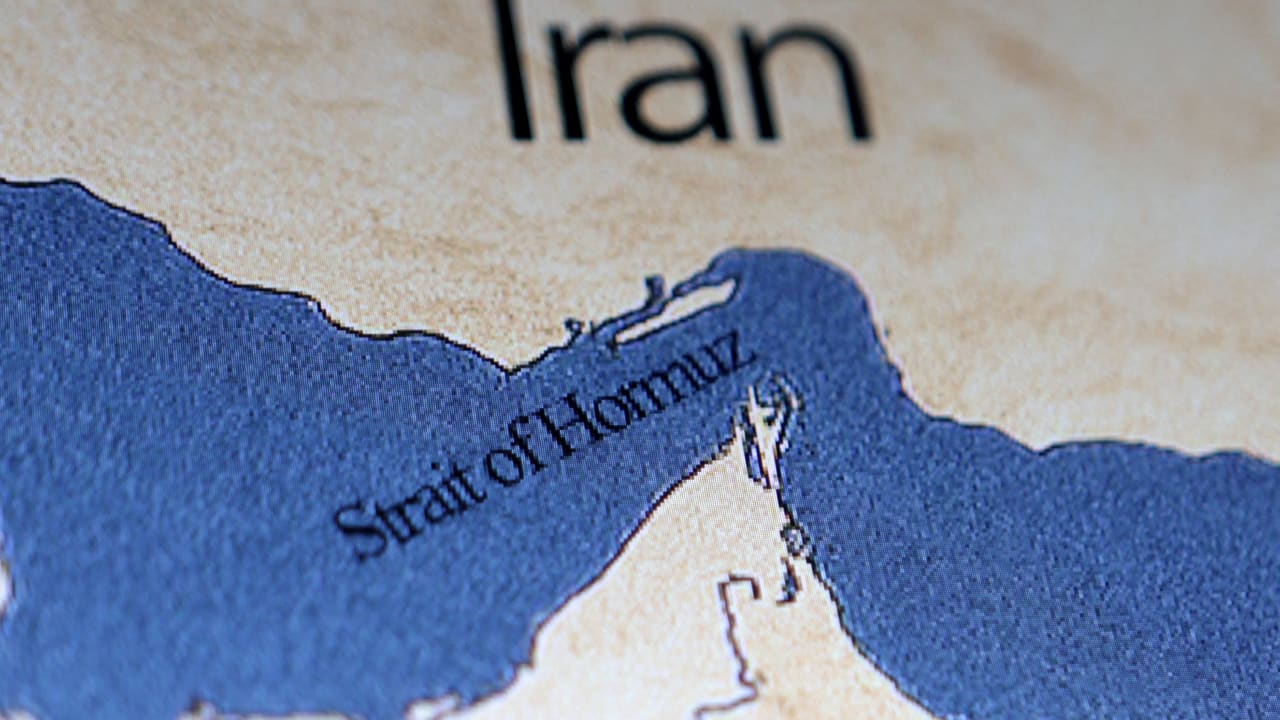
Iran's threat to the Strait of Hormuz, through which 20% of global oil transits, forces a global “risk premium” on energy prices. This is a major issue for US President Donald Trump. It is a powerful deterrent lever, signaling Iran’s capacity to disrupt international markets if pushed toward full-scale war.
Trump’s domestic political standing is often tied to energy costs and inflation. Iran understands that a spike in oil prices can destabilize Western economies and fracture international coalitions. By signaling its capacity to disrupt the global “circulatory system” of energy, Iran exerts a form of structural power that few other middle powers possess.
Iranian strategists are keen observers of American domestic politics. They recognize a profound war weariness in the United States and a strategic pivot toward the Indo-Pacific, which has left Washington reluctant to commit significant boots on the ground in the Middle East.
Tehran exploits this by focusing its pressure on US regional allies. By holding the infrastructure of Riyadh, Doha, Dubai, and Abu Dhabi at risk, Iran creates a hostage dynamic. Tehran knows it is much easier to inflict catastrophic damage on a neighboring desalination plant or oil refinery than to strike the American mainland.
This vulnerability forces Gulf capitals to act as a moderating force on Washington, often pleading for de-escalation to avoid becoming the primary battlefield in a US-Iran confrontation.
Iran seeks to shape the strategic environment, impose cumulative costs, and deter adversaries, while measuring cost-effectiveness. Iran’s war strategy is not oriented toward rapid battlefield victory but toward protracted contestation, resilience under pressure, and the manipulation of escalation dynamics.
By combining hardened infrastructure, decentralized command, proxy warfare, and multi-domain capabilities, Tehran has constructed a strategic posture that complicates conventional military planning and challenges assumptions about the effectiveness of coercive force against a state prepared for long-term resistance.
Ultimately, Iran’s war strategy is of protracted contestation. It is built on the belief that the Islamic Republic can endure more pain than its adversaries are willing to inflict. By manipulating escalation dynamics, moving between low-level proxy strikes and high-profile missile tests, Tehran maintains the strategic initiative.
Through a sophisticated blend of hardened infrastructure, decentralized command, asymmetric proxy warfare, and high-tech saturation capabilities, Tehran has constructed a strategic posture that defies conventional military solutions.
It challenges the very effectiveness of coercive force, proving that a state prepared for long-term resistance and capable of clever cost-imposition can successfully deter even the world’s most powerful military machines.
In this long game, Iran’s goal is not to win a war, but to ensure that its adversaries decide that fighting one is simply not worth the price.
The writer received his doctorate from the University of Oxford. He is a prolific scholar, a senior academic leader and institution-builder with a global profile in democracy, governance, and conflict resolution. Over a 30-year career, he has held senior leadership roles across leading universities and international institutions in Israel, the United Kingdom, the United States, and Sweden.