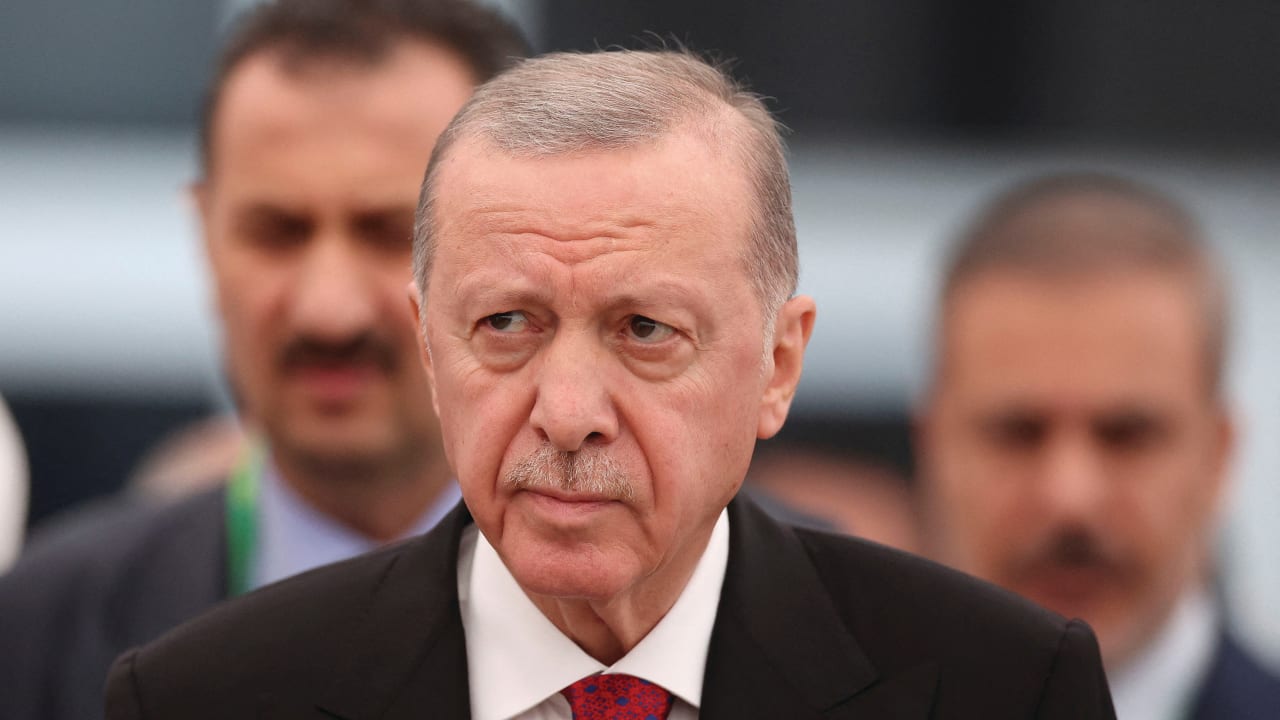
On May 21, a Turkish court delivered what may prove to be the most consequential political ruling in modern Turkish history: the effective removal of the elected leadership of Turkey’s main opposition Republican People’s Party (CHP), led by Ozgur Ozel.
For years, Turkish President Recep Tayyip Erdogan and his allies claimed Turkey is still a working democracy – flawed, but fundamentally competitive. Elections persist. Opposition parties campaign and critics speak, though warily. But the court’s move against the CHP shatters one of the final pretenses of upholding that narrative.
At first glance, the move appears self-harming. Why would a leader who has dominated Turkish politics for more than two decades feel compelled to dismantle the leadership of an opposition party already operating under immense disadvantage?
The answer is simple: because authoritarian leaders repress rivals when they fear losing to them.
Political scientist Timothy Frye has long argued that modern autocrats imprison or sideline democratic challengers not because they are strong, but because they are vulnerable. They do so when elections become unpredictable, when economic decline weakens public support, and when charismatic opposition figures begin offering voters a credible alternative.
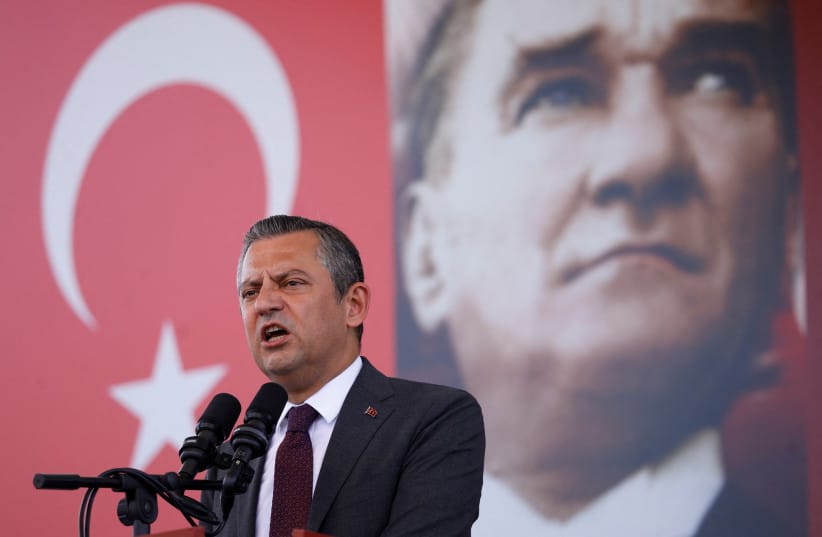
Turkey now fits that model perfectly.
Rising discontent with government
Erdogan rules a country battered by inflation, currency collapse, institutional decay, and widespread fatigue. Polls show rising discontent with the government. The CHP’s victory in the 2024 municipal elections – especially in Istanbul and Ankara – proved the opposition could still rally support despite stifling state pressure.
This latest judicial intervention is a clear signal of the regime’s insecurity rather than its strength, revealing that even entrenched leaders feel threatened when meaningful opposition emerges. But interpreting the government’s insecurity as evidence of its imminent collapse would be a grave mistake.
Western observers have repeatedly assumed that authoritarian governments lacking popular legitimacy are inherently fragile. Turkey demonstrates the opposite. A government may lose legitimacy yet remain extraordinarily durable if it controls the machinery of the state.
That is precisely what has happened under Erdogan.
Over the last decade, Turkey’s government has been remade not just to govern but to entrench power. Courts bend to executive will. Independent media is systematically crushed. Law enforcement and regulators serve political ends. Civil society faces constant intimidation. Elections continue, but on a grossly tilted playing field. Most importantly, the state has demonstrated a consistent willingness to punish dissent at virtually any cost. The imprisonment of rights activist Osman Kavala and Istanbul’s mayor, Ekrem Imamoglu, is a testament to this.
During the 2013 Gezi Park protests, many Turks took to the streets to limit the government’s growing power. Instead, the state intensified its approach. Protesters faced legal consequences. Critics lost positions, and state institutions weakened further.
The lesson the government learned was not that repression carried risks. It was that repression worked.
The CHP ruling is significant, and Turkey is no longer simply drifting toward authoritarianism. It may instead represent a new model of entrenched autocratic rule – one distinct from both China’s centralized one-party system and the chaotic military dictatorships that distinguished much of the Arab world.
Unlike China, Turkey retains a form of democratic competition. Unlike some Arab autocracies, Erdogan commands genuine popular support, but the institutions now legitimize rather than limit his authority. This hybrid model may prove alarmingly resilient.
It combines electoral legitimacy, religious nationalism, patronage networks, media domination, selective repression, and institutional capture into a government capable of surviving even deep economic crises and declining popularity. In this sense, Turkey may have “solved the puzzle” for prolonged modern authoritarianism: keeping the appearance of democracy while eliminating its substance.
That is why the May 21 ruling matters far beyond Turkey. Many outside observers have believed Turkey’s democratic traditions would correct any excesses and eventually prompt the alternation of power. But what if the mechanisms of democratic replacement themselves are being dismantled? What if unpopular regimes no longer fear elections because they command the institutions that run, police, and judge them?
This is the emerging reality in Turkey today. Erdogan’s regime may be more brittle than it seems. But frailty does not guarantee openings. Sometimes it breeds regimes more ruthless in repression, more wary of rivals, more willing to demolish the last channels for peaceful change.
Turkey’s democracy is dying, and millions of Turks now know that replacing their government – at the polls or in the streets – may simply no longer be possible.
The writer is a senior fellow at the Foundation for Defense of Democracies.