
Iran’s latest missile barrages against Israel should be read as more than retaliation for an Israeli strike in Dahiyeh. They are part of a wider attempt to use Israel as leverage in the negotiations with Washington.
Tehran’s message to the United States, the Gulf states, and Israel is simple: Any agreement that ignores Iranian interests will leave the region burning. Israel, Lebanon, the Houthis, the Strait of Hormuz, US bases, and the Gulf can all be reconnected into one pressure system.
Iran’s leaders understand the risks of a full regional war. Such a war could expose the regime’s military, economic, and social weaknesses. Yet the regime also fears an agreement that would force it to shift from permanent confrontation to national rehabilitation. A country with a battered economy, aging infrastructure, and an exhausted public would then have to ask difficult internal questions.
Tehran is a state that survives through resistance
War gives the regime discipline, fear, and justification. Reconstruction would require priorities, accountability, and a different language of governance. Tehran has spent decades building a state that survives through resistance. It has far less experience building one that survives through recovery.
That is why Iran wants the benefits of a deal while preserving the tools that made the deal necessary in the first place. It wants money, time, the removal of barriers, quiet for Hezbollah, and the preservation of enrichment. It wants relief while maintaining its pressure points. It wants a ceasefire that leaves the axis intact.
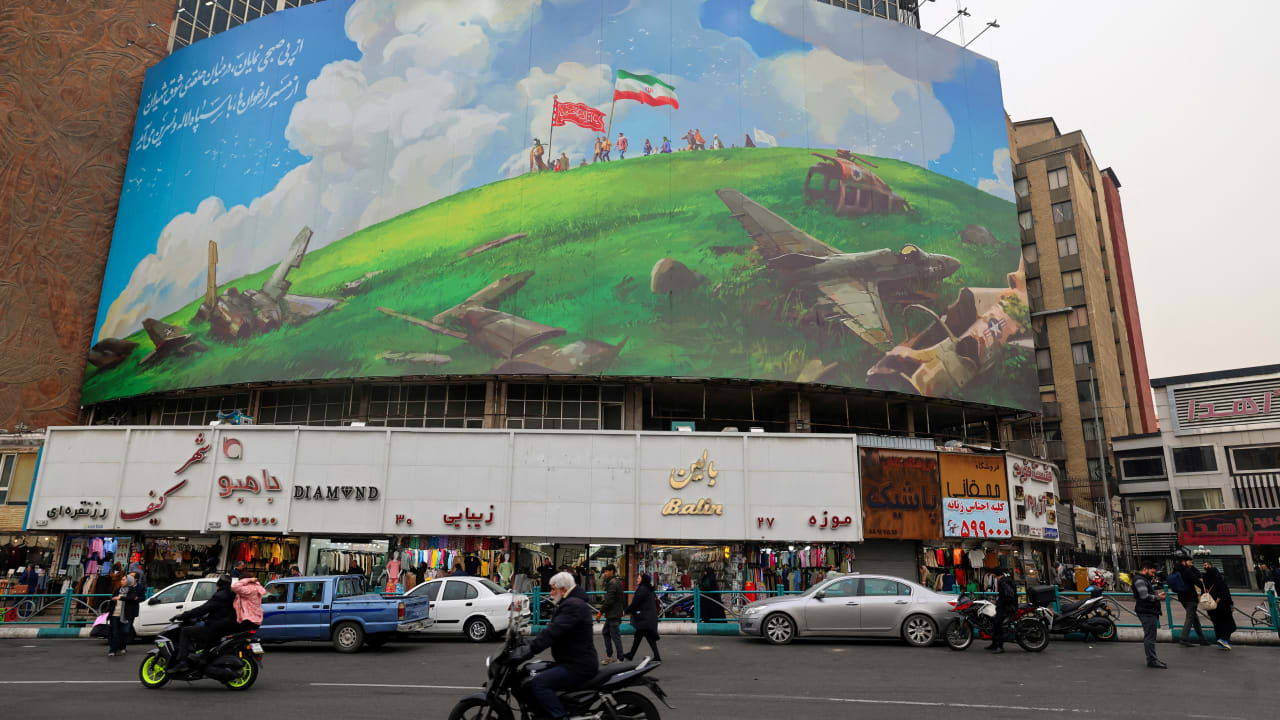
At the center of Iran’s strategic thinking is the shield it built over decades: nuclear capability, missiles, Hezbollah, the Houthis, and regional militias. From Tehran’s perspective, these are the regime’s insurance policy.
This is why the missile fire on Israel matters. Iran is firing to set a price. If Israel strikes Hezbollah in Beirut, Iran responds. If Washington wants everyone back at the table, it must bring compensation. If US President Donald Trump wants a deal, Tehran wants him to understand that time carries a cost.
Trump has repeatedly signaled that he wants to prevent a wider war and return quickly to negotiations. Tehran knows how to translate those signals into bargaining language. Every barrage becomes one message: quiet has a price.
This is a dangerous gamble. Once missiles are fired, no one fully controls the route of escalation. A missile can miss, hit, kill, trigger a response, or force Israel into an operation that was never part of the original plan. Iran is trying to manage a measured escalation, yet the Middle East has often shown that “measured escalation” is the phrase used right before control is lost.
Iran is raising the price of a deal
Iran sees Trump’s need for an agreement. The president wants to escape the Iranian maze, but he also cannot afford a weak agreement that looks like a faded version of the Obama-era deal. He wants a larger package: an open Strait of Hormuz, calmer markets, breathing room for Gulf states, and perhaps a wider Abraham Accords framework.
Iran understands that need and is pressing on it. Tehran knows that Trump wants a way out, so it is raising the price of the exit.
Israel sees the matter differently. If direct Iranian fire on the Israeli home front becomes an accepted stage in negotiations, a dangerous equation takes shape: Israel hits Hezbollah, Iran fires at Israel, Trump urges both sides back to the table, and Hezbollah receives an indirect diplomatic umbrella.
Israel cannot fully absorb that equation. It also does not need to respond wildly. It must respond in a way that makes clear that the Israeli home front is not an Iranian bargaining chip.
The central question is whether Iran is pushing all its cards to the middle of the table: missile fire on Israel, activation of the Houthis, pressure on the Gulf, threats around Hormuz, and protection for Hezbollah. This is a strategy of coercion under fire.
That strategy has limits. The longer the missile fire continues, the less stable any agreement becomes. Negotiations cannot hold when Iran uses missiles to improve its position, Israel feels compelled to restore deterrence, and Trump tries to hold a deal in one hand while keeping the lid on the pot with the other.
Each day raises the chance that the agreement will not collapse in one dramatic moment. It may simply erode through another “measured response,” another limited barrage, and another attempt to close the round before the next one begins.
Iran wants an agreement that preserves its power levers. It wants the fear of regional war to pay dividends. Israel and the United States must understand the price of accepting that logic. If missile fire on Israel becomes a legitimate bargaining tool, the agreement will not restrain fire. It will reward it.
Tehran would then learn the most dangerous lesson of all: The best way to improve a deal is to shoot into it.
Professor Uzi Rabi, Ph.D (Tel Aviv University, 2000) is a senior researcher and the head of the program for Regional Cooperation at the Moshe Dayan Center.