
In these weeks leading up to the Tisha B’Av fast day, our focus naturally turns to the destruction of the Temple. We refrain from live music, weddings, and wearing new clothes in order to maintain a communal level of mourning.
But public grief alone is not enough. We need to actively work to restore the Temple’s legacy; as the Jerusalem Talmud says, “Any generation in which the Temple is not rebuilt, it is accounted as if it were destroyed in its days [by that generation].”
We cannot move toward rebuilding if we concentrate solely on sadness. Dwelling too much on sadness creates paralysis, and, paradoxically, gives us an excuse not to act. When we talk about rebuilding, we must begin with a spiritual and moral awakening.
First, we must restore the vision embodied in our Holy Temples, a vision of unity and justice which was tragically lost twice, and can feel painfully unattainable today.
As we face outside threats from antisemitism, terrorism and war, there is too much disagreement and discord when it comes to who we are as the Jewish people, how to come together, and what our values are as the nation of Israel. It feels disturbingly similar to the societal discord that preceded the destruction of the Temples.
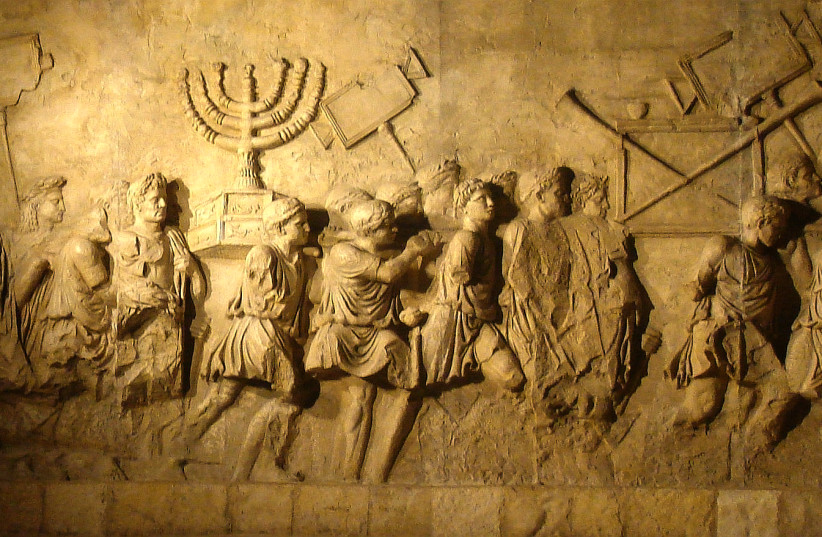
Therefore, as we make our way through the “Three Weeks,” spanning from Tamuz 17 and culminating in Tisha B’Av, we must use the inspiration found in the Temple to help shape our future as a society of shared responsibility and kindness based on common values.
In the days of the Temple, the pilgrimages to Jerusalem brought together Jews from every demographic, creating shared destiny. This practice and others built into the Temple encouraged all of Am Yisrael – the Nation of Israel – to participate in the development of a just society and shouldered the responsibility, an ideal we crucially need to reclaim today.
For example, as Israel remains in a defensive war, the ongoing exemptions from military service for tens of thousands of ultra-Orthodox citizens stand in stark contrast to this ideal and to halacha itself, leaving the heavy burden of national security and grueling reserve duty to fall disproportionately on the rest of society.
More unity needed in Israeli society
More unity and a sense of shared responsibility would also go a long way in helping us respect each other. Remarkably, even non-Jews brought Temple offerings, demonstrating that the Temple served as a beacon for all humanity.
We see a glimpse of this universal respect today, with Muslims, Druze, and Christians serving alongside Jews in the army, rescue, and medical services. Such cooperation should be celebrated, even as we recognize that fringe acts of extremism and racism threaten to shatter this fragile, shared future.
Social justice was another pillar of the Temple. The societal fabric of the Temple era was reinforced by mechanisms designed to protect the vulnerable. This is evident in the laws of the shmita – Sabbatical year – which leveled economic disparity, and the Chamber of Secrets within the Temple itself, where the wealthy could donate, and the poor could receive with total anonymity.
While there are many laudable projects to improve society today, core challenges still remain. For instance, it is a severe injustice that there are agunot, women whose husbands refuse to grant them a divorce, alongside cases of spiteful marriage recalcitrance when husbands are unable to present a get to their wives, trapping spouses in lives of suffering and abuse.
To make matters worse, some in the religious establishment are ignoring the halachic tools available to solve this problem. When there is room within the framework of Jewish law to help the vulnerable and promote justice, utilizing it is a sanctification of God’s name. Proper measures need to be courageously taken.
I have often been asked by students and others about why I don’t go up to the Temple Mount in Jerusalem. Do I not care about rebuilding the Beit HaMikdash? My response is always punctuated with a reminder that until we solve the agunah issue and other social challenges, the Messiah will tarry.
Bringing the final redemption is up to us, and concentrating solely on a physical rebuilding of the Temple, or on the very real holiness that remains where the Temples once stood, is far from adequate.
Ultimately, the many specific details of the Temple’s structure and its practices reflect its commitment to unity and social justice, two values that should be of utmost importance today. A fascinating discussion in the Talmud (Bava Batra 60b) illustrates this balance. Following the destruction, Rabbi Yehoshua hears the opinions of his fellow sages who speak about abstaining from meat, wine, and even painting their homes as a sign of mourning.
Rabbi Yehoshua acknowledges that mourning is appropriate, but he ultimately states one may eat meat, drink wine, and can indeed plaster a new building – as long as a small area is left unplastered. His ruling provides a blueprint for sustainable memory; we must acknowledge the loss, but we cannot allow grief to paralyze us and our responsibility to move forward and build anew.
Fasting; learning about how the design of the Beit HaMikdash encouraged unity and social justice; or catching a glimpse of a purposely-placed unfinished stone in a new Jewish home should inspire and challenge us to work toward a better, more just society. May we be blessed this year to see the restoration of the Temple and the values it was meant to project.
The writer is president and rosh yeshiva of Ohr Torah Stone.