Israel Elections
Netanyahu or Eisenkot? Israel's election leaves Herzog with an impossible choice - comment
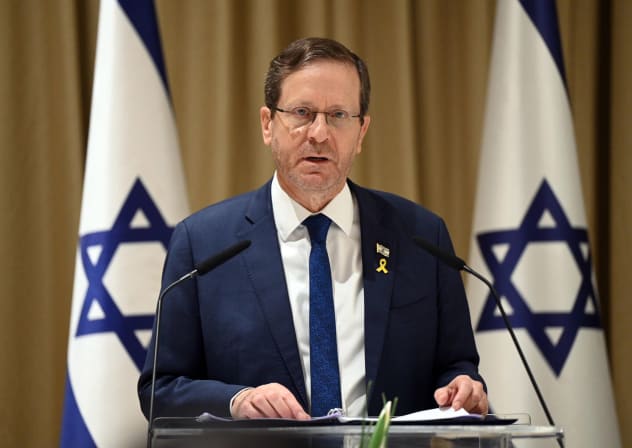
With Likud emerging as the largest party but Gadi Eisenkot's opposition bloc ahead in the initial exit polls, the president faces a difficult decision over who should be given the first opportunity.

Eisenkot and Netanyahu have reason to celebrate, but Israel does not, yet - comment

Liberman's Yisrael Beytenu projected to win 7-8 seats in next Knesset, election exit polls predict

Arab voter turnout would have been lower had there been any other outgoing government - analysis
Israel could face a hostile US president after Trump leaves office, Netanyahu warns
Netanyahu raised concerns about how the next Israeli prime minister would manage relations with a potentially hostile US administration.

Eisenkot leads Netanyahu in four polls, but neither bloc secures Knesset majority - poll
With 10 days until the election, four recent polls show Gadi Eisenkot's Yashar party ahead of Likud, while the Zionist opposition and Netanyahu's bloc remain virtually tied.
Israeli TV host calls Gadi Eisenkot a 'monkey', alleges behind-the-scenes control
During the discussion, Magal said, "He's a monkey, he's a monkey. Are you impressed by the fact that he's Mizrahi?"
Democrats party's Golan questions Shin Bet chief Zini's ability to safeguard Israeli elections
Yair Golan raised concerns over Shin Bet chief David Zini's ability to protect Israel's upcoming elections, accusing him of failing to address Qatargate and Jewish terrorism in the West Bank.

Ex-Shin Bet chief warns Netanyahu could deliberately escalate tensions ahead of elections
Former Shin Bet chief Yoram Cohen warned that Netanyahu could deliberately escalate security tensions ahead of Israel's elections, citing concerns that political motives have influenced his decisions

Ben-Gvir surges in polls as election campaign exposes deep divisions in Israel
The contrasting reactions to Ben-Gvir's campaign visit to Ramla offered a glimpse into Israel's deeply polarized society as his far-right Otzma Yehudit party surges in the polls.

Israel picks between 'secular democracy or theocracy' in election, chess master Garry Kasparov says
"Just as Abraham Lincoln observed that the government could not persist 'half slave and half free,' Israel cannot go on half theocratic and half secular," Kasparov, whose father was Jewish, said.

Majority of Israelis favor unity government if October 27 election ends without clear winner - poll
The Maariv poll also found that 48% of people think Gadi Eisenkot would make a better prime minister than Prime Minister Benjamin Netanyahu, who had 41% support, giving Eisenkot a significant lead.
Israel does not need politicians to always agree, but it needs a unity government - editorial
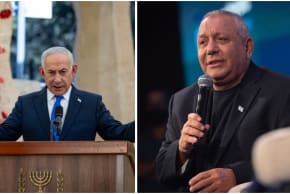
For the politicians vying for our vote to lead the country, the task ahead should not simply be to form the next government but to begin putting the country back together.

Yaron Zelekha slams Netanyahu's economic policy, vows to cut cost of living
“The reason Bibi attacks me is that he knows that once I become Finance Minister, the public will realize that life here could have been cheaper over the past twenty years,” Zelekha said.
