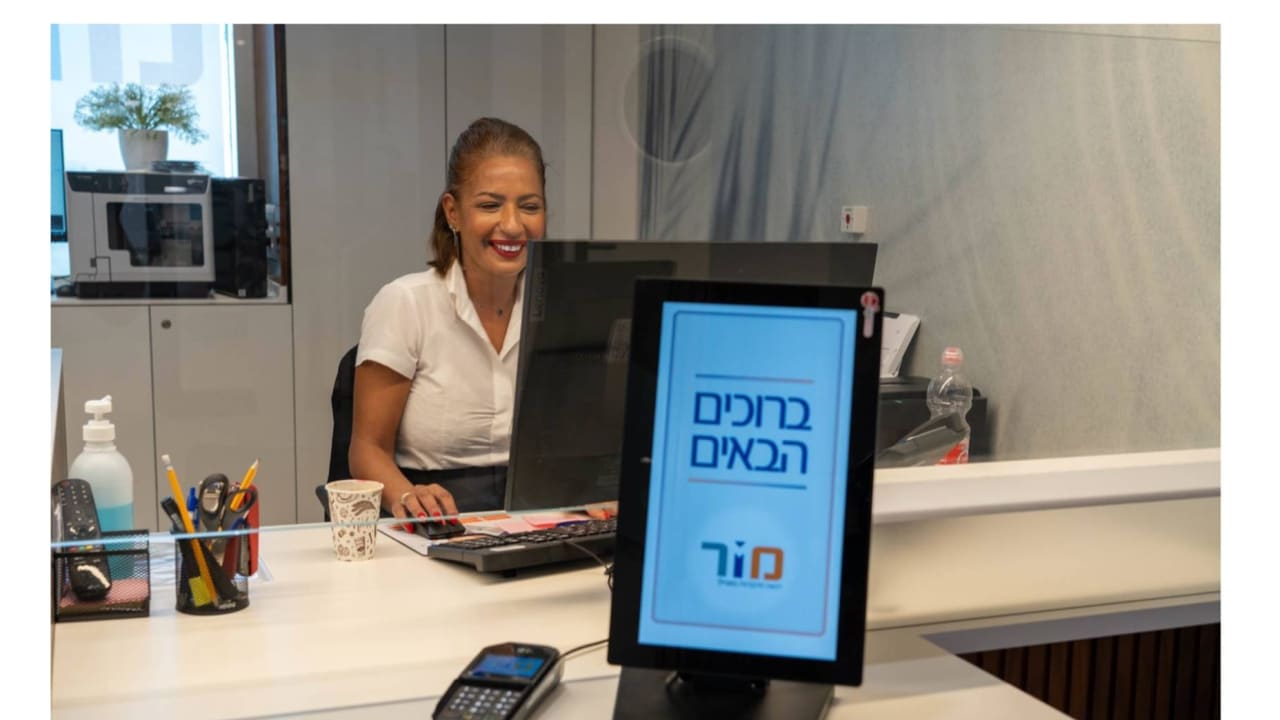
Workers at Mor Institute will receive cumulative wage increases of approximately 13.5% by the end of 2030 under a new collective agreement signed by Histadrut Hamaof, Mor Institute management, and the institute’s workers’ committee.
The agreement, signed on July 5, includes across-the-board annual wage increases beginning in 2026, additional differential raises based on professional criteria, expanded pensionable pay, improved welfare benefits, and a long-term employment stability framework. It comes as collective wage agreements and worker benefits remain a central issue in Israel’s labor market.
Mor Institute, part of Clalit Health Services, operates a nationwide network of diagnostic medical centers. The institute has expanded its activity in recent years, including the opening of a new branch in Beersheba and the launch of a comprehensive saliva-based genetic test for hereditary disease risk.
Pay raises and pension benefits
Under the agreement, employees will receive annual wage increases through 2030, amounting to a cumulative increase of about 13.5%. A separate mechanism will also allow for additional differential wage increases based on professional criteria.
The deal also anchors role-based pay supplements as part of employees’ determining salary, with the supplement set at no less than NIS 600 per month for a full-time position. This means the supplement will be included in calculations for pensions, advanced training funds, and other social benefits.
In addition, the agreement establishes a new bonus mechanism for various professions at the institute. Most of the bonuses will be included in the insured salary used for pension contributions, a move expected to have long-term financial significance for employees’ retirement savings.
Beginning in 2027, eligibility for convalescence pay will also be expanded according to seniority.
Expanded welfare benefits
The agreement includes a broad welfare package for employees and their families. It increases scholarships for employees’ children, expands summer camp support, adds company vacations for families, and allocates an annual NIS 220,000 budget for a digital wallet that will allow employees to access subsidized benefits.
The deal also includes birthday gifts for all employees, gifts for major family events, special vacation days for weddings, births, and children’s weddings, support during hospitalization, and a mourning kit in the event of the death of an immediate family member.
Beginning in 2028, employees who miss no more than three sick days during the year will be eligible for a new attendance incentive grant equal to two full workdays.
The agreement also increases the welfare budget of the workers’ committee in order to expand activities and benefits for employees.
‘A significant agreement’
Adv. Gil Bar-Tal, chairman of Histadrut Hamaof, said the agreement was the result of “negotiations conducted with mutual trust, responsibility, and cooperation” between Mor Institute’s management and the workers’ representatives.
“This is a meaningful agreement that strengthens employment security, significantly improves employment conditions, and proves that genuine cooperation between management and workers’ representatives leads to long-term achievements for the employees and the organization as a whole,” Bar-Tal said.
He thanked Adv. Zeinab Mansour, head of the health division at Histadrut Hamaof, for her work with the Mor Institute workers’ committee, as well as workers’ committee chairman Eitan Kurtz and committee members Rozy Ben-Zion and Itzik Shtivi.
Bar-Tal also thanked Michael Kostchev of the Histadrut’s economics department and Mor Institute management, including CEO Yoram Segal, CFO Moti Fishman, and human resources manager Hagit Tslalikhin, for what he described as professional and respectful negotiations.
“Above all, I want to thank the workers of Mor Institute,” Bar-Tal said. “Because of the dedication, responsibility, and professionalism you show every day, this agreement was signed. It is an agreement intended for you, and it expresses deep appreciation for your contribution to Mor Institute and to Israel’s healthcare system.”