
Time flies. In a week, it will be Rosh Hashanah, and the High Holy Days will kick off. Before you blink, it will be over, and advertisements for Passover in Thailand will begin to appear. As we near the completion of the Torah, this week we read a double Torah portion of Nitzavim and Vayelech.
It’s the final charge given to the Jewish people by Moses on the last day of his life.
To quote Rabbi Jonathan Sacks: “When I was a student at university in the late 1960s – the era of student protests, psychedelic drugs, and the Beatles meditating with the Maharishi Mahesh Yogi – a story made the rounds. An American Jewish woman in her 60s traveled to north India to see a celebrated guru. Huge crowds waited, but she pushed through, saying she needed to see him urgently.
Weaving through the swaying crowds, she eventually entered the tent and stood in the presence of the master himself. She then said to him: “Marvin, listen to your mother. Enough already. Come home.”
Rabbi Sacks continued, “Starting in the Sixties, Jews made their way into many religions and cultures with one notable exception – their own. Yet Judaism has historically had its mystics and meditators, its poets and philosophers, its holy men and women, its visionaries and prophets. It has often seemed as if the longing we have for spiritual enlightenment is in direct proportion to its distance, its foreignness, and its unfamiliarity. We prefer the far to the near.
Moses foresaw this possibility:
“What I am commanding you today is not too difficult for you or beyond your reach. It is not in heaven, so that you have to ask: ‘Who will ascend into heaven to get it and proclaim it to us so we may obey it?’ Nor is it beyond the sea, so that you have to ask: ‘Who will cross the sea to get it and proclaim it to us so we may obey it?’ No, the word is very near you; it is in your mouth and in your heart so you may obey it” (Deuteronomy 30:11-14).
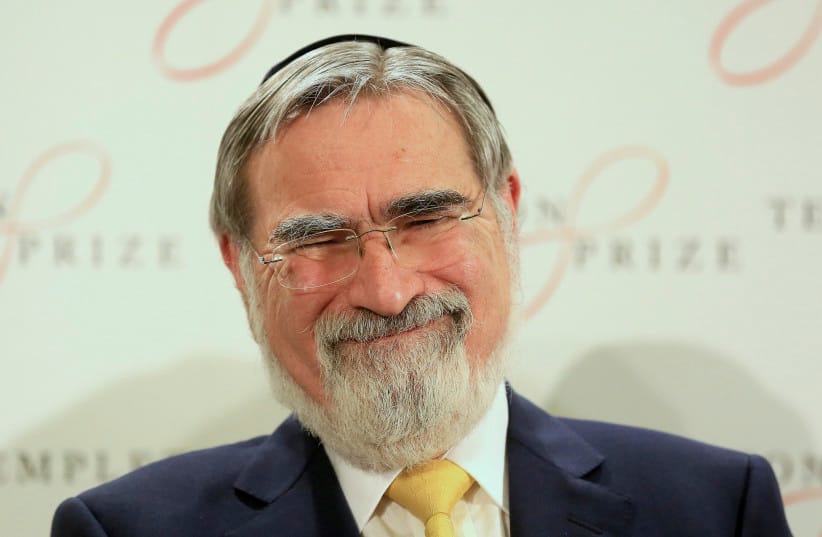
Rabbi Sacks concluded, “Moses sensed prophetically that in the future Jews would say that to find inspiration, we have to ascend to heaven or cross the sea; it is anywhere but here.”
True for finance too
The same holds true for finance. I can’t tell you how many people aren’t satisfied with tried and tested ways of growing wealth, and they search for get-rich-quick or esoteric, untested means of creating a nest egg.
A few years ago, I had a call with a retired couple thinking about making aliyah. They had about $500,000 in cash from the sale of a property. After going over their entire financial situation, I suggested a diversified portfolio using Exchange Traded Funds (ETFs) linked to broad-based market indices as well as Federal Deposit Insurance Corporation (FDIC) insured Certificates of Deposit (CD).
They told me, “No offense, but that isn’t going to make us a lot of money in a short period of time.”
They said that their son has dabbled in commodities trading, and he suggested that they also invest this way. They asked my opinion on investing in cocoa, orange juice, and wheat. (I cynically said: “If you mean buying chocolate milk, some Prigat OJ with pulp, or a bag of pita bread, then all is good, but if this is your retirement plan, you’re crazy.”)
Keeping it simple
When it comes to growing wealth, it’s not so complicated. Keep it simple. Stay away from TikTok and other social media reels, where debt and zero-down [no upfront cash] real estate are hailed as sound financial advice. Don’t make the mistake of being “too smart.”
It’s not just wheat. I could write a book about the crazy investment ideas that I have seen people throw money at. The irony is that the path to financial security is right in front of us. It’s usually found in the boring stuff: spending less than you earn, saving consistently, investing in a diversified portfolio, avoiding debt, and giving your money enough time to grow.
Which brings us back to Moses: “The word is very near you; it is in your mouth and in your heart.” We don’t need to cross the sea to find the answer. Sometimes, we just need to have the discipline to follow what we already know works.
As Rosh Hashanah approaches, now is a good time to take a financial accounting of the past year. Not just how our investments performed, but whether we followed our plan. Did we save enough? Did we spend intentionally? Did we take unnecessary risks? Did we allow fear or greed to dictate our decisions?
Perhaps the best financial resolution is also the simplest: A new year doesn’t require a new investment gimmick; it may simply require renewed commitment to the basics.
Stop looking for the answer somewhere far away. It may be much closer than we think.
The information in this article reflects the author’s opinion and not necessarily that of Portfolio Resources Group Inc. or affiliates.
The writer is author of Retirement GPS: How to Navigate Your Way to A Secure Financial Future with Global Investing and a licensed financial professional in the US and Israel. For more information: (02) 624-0995, www.aaronkatsman.com, aaron@lighthousecapital.co.il