This week, I found myself in Petah Tikva. Looking for a place to have lunch, I searched through a list of sushi restaurants in the area. Some of the country’s best sushi can be found in Tel Aviv and Herzliya. I settled on a place in Tel Aviv’s Ramat HaHayel neighborhood.
As I drove there, I was struck by the amount of new construction. It seemed like every street had new growing towers, new parks, and a long list of companies that were sprouting up to rent the emerging office space. The street level had eateries.
This is Israel after more than 1,000 days of a multifront war. It’s a dynamic country, rapidly growing, with a strong economy. Defense exports are at an all-time high. The defense budget is also burgeoning.
If you read the headlines, you might think everything is doom and gloom – lurching from crisis to crisis. No doubt, at the political level, and sometimes in international relations, things are lurching from crisis to crisis. The overall picture, however, is positive.
Rahm Emanuel, a key figure in the US Democratic Party, came to Israel this week. He was US President Barack Obama’s chief of staff from 2009-2010, mayor of Chicago from 2011-2019, and US ambassador to Japan from 2022-2025. While here, he spoke at Tel Aviv University.
“Prime Minister [Benjamin] Netanyahu and his government have led Israel into a dead end,” Emanuel wrote on X/Twitter, citing his speech. Israel has received a kind of “blank check” of support from the US, he wrote, which has “come without expectations, accountability, or consequences.”

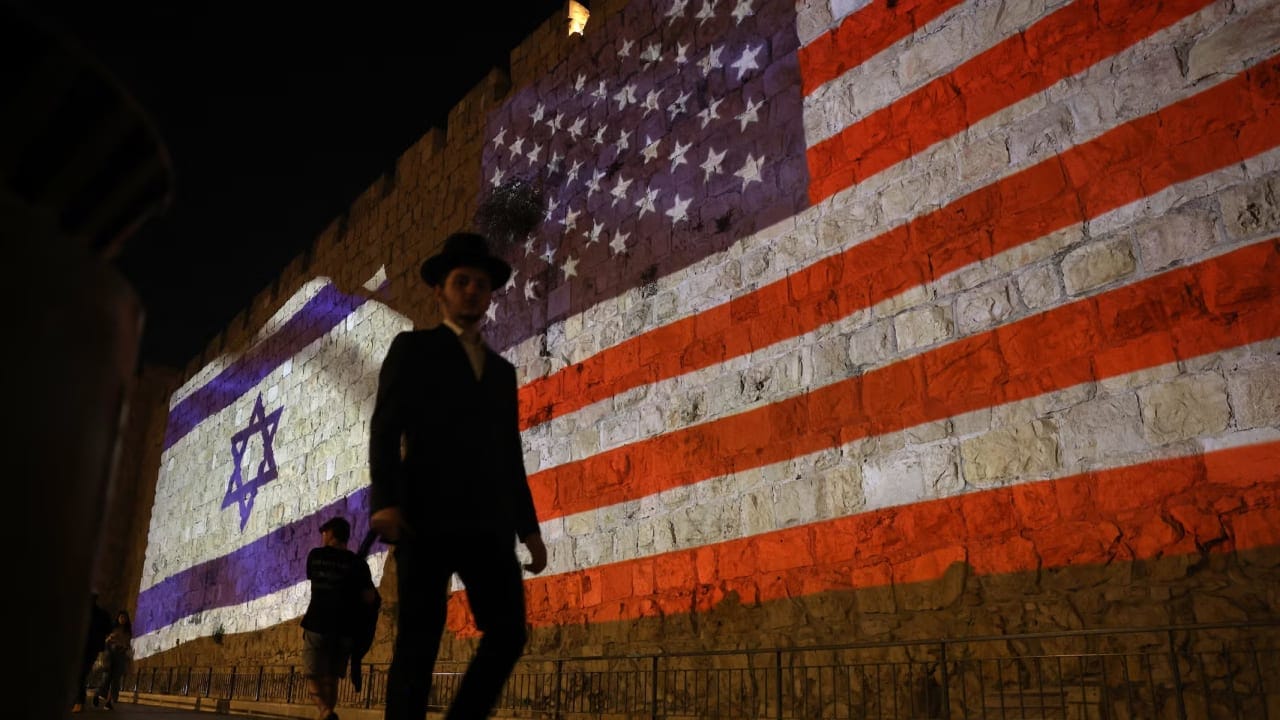
This argument has been made before and sits at the crossroads of what kind of policy works best in the US-Israel relationship. The discussion about the speech seems to be whether Israel needs more “tough love” or more unconditional love.
You might be forgiven for not recalling that in the era when Israel received essential support from the US – between independence in 1948 until President Bill Clinton’s years in office, the relationship was not often discussed in terms of this unconditional support.
“The strongest alliances are built on honesty, shared values, and the willingness to tell each other hard truths,” Emanuel said. “It’s time for a fundamentally new approach to the US-Israel relationship, one that advances Israel’s security, Palestinian’s right to self-determination, and the Arab world’s desire for regional stability.”
Some critics said his remarks were not fair to Israel, which is under threat and faces “genocidal Islamists.”
This kind of reaction might be exaggerating the danger. The genocidal Islamists, such as Hamas, were appeased by Israel for too long.
The way they turned Gaza into a terrorist stronghold was tragically the result of bad policies enacted in Jerusalem. Those policies enabled Hamas to grow after it illegally took over Gaza in 2007.
Those who said Hamas was a threat before the October 7 massacre were dismissed. The 3D-chess policy of enabling cash to go to Hamas, while letting it wage numerous wars every year so that the conflict could be “managed,” led to disaster.
Hamas appeasement forced Israel to evacuate its communities
The appeasement of Hamas, which was a choice in Jerusalem, was also part of a broader policy that tolerated Hezbollah’s growth into a major threat. After Hamas’s massacre, Israel had to evacuate communities in the Gaza periphery and also in the North.
This was unprecedented. Israel was so concerned that it couldn’t wage a two-front war and protect its people, it had to evacuate more than 100 communities, including the cities of Sderot and Kiryat Shmona.
Israel had never done this before. In the era of David Ben-Gurion, Israel never evacuated civilians. Was Israel more safe and secure in 1953 than in 2023?
The Gaza border communities that were attacked on October 7, 2023, and then evacuated were mostly established in the 1950s, when they were carved out under threats.
Many factors led Israel to evacuate civilians in 2023. Today’s tactics in Gaza, Syria, and Lebanon are a result of those failures.
None of this is a result of Israel’s enemies being stronger. It is a result of Israel being stronger but underestimating the enemy. Strong countries, like strong companies or strong sports teams, learn from failure.
The challenge for Israel is often misunderstood. Israel is not more vulnerable than in the 1950s. It is not more isolated and threatened. Israel has thrived from the 1950s until today under different types of threats.
The correct understanding of Emanuel’s speech is not to dismiss it, or claim he doesn’t understand the threats Israel faces. The better response is that Israel today is a very strong country. It is growing, and its biggest challenge is actually managing that strength.
The failure of the October 7 massacre was not about Israel being incapable of defeating Hamas, Hezbollah, and Iran. It was about Israel being very capable, but hubris led to disaster.
This is a recurring pattern for strong and developing countries. Their main challenge is not adversaries but rather their own internal policies and choices about what kind of country they want to be.
It’s no surprise that Israel and Turkey appear to often be at loggerheads. Both countries are very strong and have a sense of identity and national ideology.
In terms of their trajectory from being nationalist, secular countries with forms of socialism to becoming more religious with pretensions to expand more, they have a lot in common. This may lead to a clash, as some predict. If so, it would be due to failure to manage their strength and growth.
This is the famous “Thucydides Trap” coined by political scientist Graham Allison. Athens and Sparta chose a path to war not because they were threatened or weak, but because they were strong and misjudged the future.
Israel’s real challenge is managing its strength, not its vulnerabilities
Israel's problem is not really what will happen in US politics. Its challenge is primarily how it will manage its own strength.
Perceptions among some commentators that Israel is still in the 1950s, and that it is surrounded and under some existential threat, are misplaced. In the two rounds of conflict with Iran, for instance, Israel achieved air superiority.
There is a perception that if the US-Israel relationship is not one of unconditional support, then somehow the alliance is at huge risk. In essence, that means anyone transported back to the 1980s, when Ronald Reagan’s and George H.W. Bush’s administrations were more critical but supportive of Israel, would conclude the relationship was very bad.
This kind of expectation leads to all sorts of misplaced pessimism. The US has already reduced the warmth it bestows on other allies. The expectation that Israel must receive complete support, or else there is an existential crisis, creates an impossible burden on the relationship.
A healthier understanding of the relationship would pose the question more in line with the realities of Israel’s strength and how healthy alliances may also have disagreements.
A confident Israel that recognizes its strength, and also the limitations that strength may have, will be more confident in its future ties with the US and other countries.
There is a tendency to view a lot of Israel’s friendships abroad as a kind of zero-sum game. Either it’s perfect, or it’s bad.
This isn’t always the fault of Israel. Other countries have adopted domestic politics that lead to broad swings in policy. One party comes to power and supports Israel, while another party comes to power and doesn’t. This lurching back and forth isn’t ideal in foreign policy. It creates a lot of uncertainty.
This kind of uncertainty seems built into discussions about what Emanuel’s speech says about the future of the Democratic Party and Israel’s ties with the US. A more reasonable discussion would cite Israel’s larger challenge, which is managing its own strength and deciding what kind of country it wants to be.
Does Israel want to be the dynamic economy on display in places such as Ramat HaHayel, or does it want to be distracted by extremism that is ripping at the fabric of the state?