

As someone who loves running, I am familiar with the rush that comes with reaching a certain goal. I also know that feeling of disappointment when I am prevented from reaching that goal, whether due to a physical injury or extenuating circumstances.
Over the past six years, several sporting events in Israel were canceled or postponed first due to the COVID-19 pandemic and, more recently, because of war.
For professional athletes, such disruptions are especially hard. Exactly one year ago, the first round of fighting with Iran brought disappointment for the thousands of Jewish athletes who were planning to take part in the 22nd Maccabiah Games, also known as the Jewish Olympics.
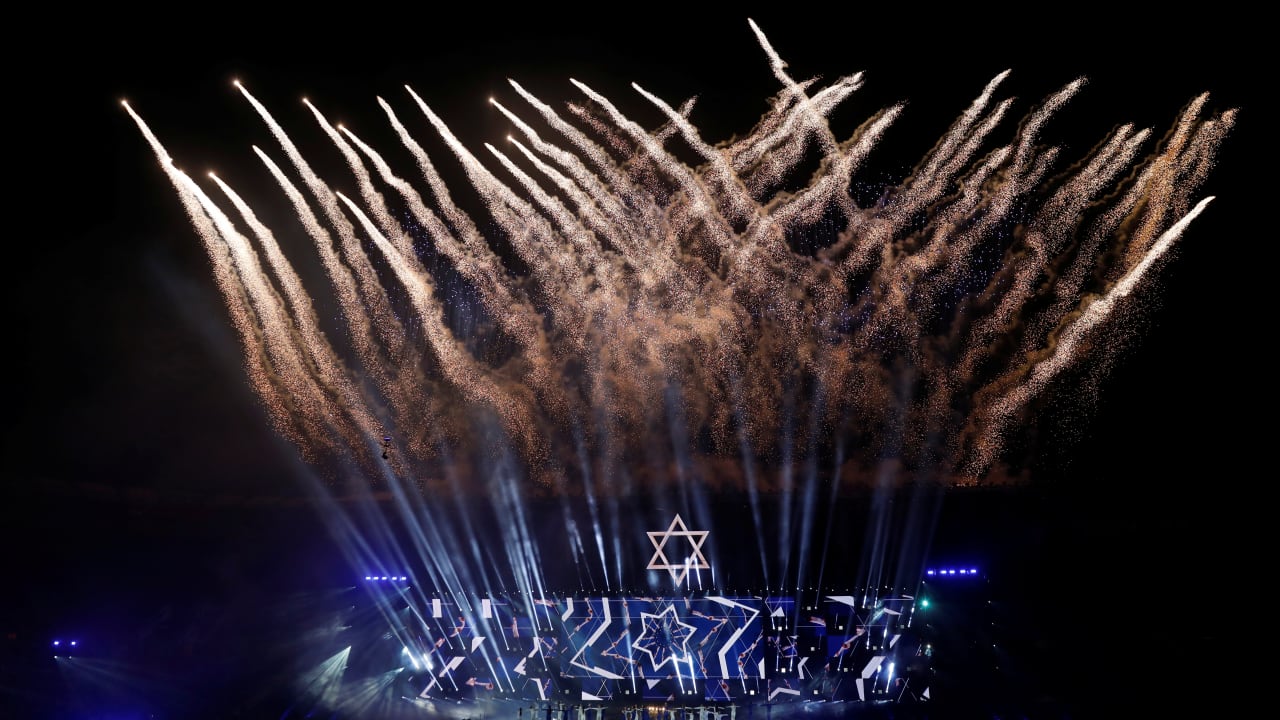
That competition is now set to kick off on July 1, albeit in a smaller format. For our cover story, staff writer Chani Kaplan spoke with representatives of the Maccabiah and athletes about their hopes for this special event happening in the shadow of war.
Feature writer Rachel Fink spotlights the growing number of para-athletes, many of whom are young adults wounded in the war, who will participate in the Maccabiah. Emil Bothe talks to a California-born soccer player who will see his love for Israel and for the game come together at the competition.
Veteran Jerusalem Post reporter Greer Fay Cashman profiles judoka champion Danny Hakim about his contributions to Israeli sports.
Feature writer Batsheva Shulman interviews an Israeli artistic gymnast about her dream to compete in the 2028 Olympics; and Sam Halpern, The Jerusalem Post’s senior field reporter, profiles an upcoming Israeli-Druze mixed martial arts boxer about his setbacks and triumphs.
On Iran, Yasmin Sayeh, a member of Forum Dvorah, writes about the disappointment of ordinary Iranians that the oppressive ayatollah regime remains intact; Vice President of the Jerusalem Center for Security and Foreign Affairs, Aviram Bellaishe, examines what prompted Iran to strike Israel and other places in the region recently; Danny (Dennis) Citrinowicz from the Institute for National Security Studies looks at the tough choices now facing President Donald Trump; and Janatan Sayeh, an Iranian analyst with the Foundation for Defense of Democracies, explains why any deal with Tehran must cover much more than just the nuclear aspect.
Meanwhile, Amit Ben-Tzur, CEO of the Arlozorov Forum, an Israeli policy research institute, looks at where Israel stands ahead of the upcoming elections; and Moshe Fuzaylov, a senior fellow at the Misgav Institute for National Security and Zionist Strategy, argues in favor of the controversial death penalty law for Palestinian terrorists.
Ariel Admoni and Sagiv Steinberg, from the Jerusalem Institute for Strategy and Security, explore Trump’s 20-point plan for postwar Gaza, while Dana Ben-Shimon goes deeper into the political drama inside Palestinian Authority President Mahmoud Abbas’s Fatah party.
Looking at the broader region, Andrew Fox, from the UK’s Henry Jackson Society, takes us to Somaliland, the African territory recently recognized as an independent country by Israel; and Yoel Guzansky, a senior fellow at Tel Aviv University’s Institute for National Security Studies, looks at the new role Pakistan is now playing in the Middle East.
Rounding out the edition, Dr. Keren Tzarfati, a clinical researcher and psychotherapist, who is the director of MAPS Israel, explores a defining moment for mental health and societal resilience in Israel.
It’s a marathon edition and I hope you find inspiration, especially in the sports stories. Keep on running!
– Ruth Marks Eglash