Armored warfare of the past century has yielded to conflicts that begin with economic coercion. What is changing is both the form of conflict and the definition of power. Now, major powers project influence and weaken adversaries through economic instruments – energy, technology, supply chains, sanctions, ports, currencies, and food – once considered purely commercial.
As a truth so fitting that it easily wore Henry Kissinger’s name, “Who controls the food supply controls the people; who controls the energy can control whole continents.” Today, those words describe a brand new order more than a mere political reflection. Markets have evolved from trade spaces into arenas of confrontation as dangerous as traditional battlefields.
This change unfolded gradually, then accelerated rapidly in recent years. The Western sanctions on Russia after the Ukraine war constituted one of the broadest economic pressure campaigns in modern history, far from fleeting financial measures. The number of sanctions levied against Moscow has surpassed 16,000, according to international estimates. Russia has wielded energy as a strategic pressure tool, not just a commodity, to unsettle Europe and force recalculations of winter preparedness, energy security, and inflation. The war has spilled from the front lines into gas pipelines, ports, banks, payment networks, and insurance.
The same dynamic is unfolding in the US-China rivalry, with even more complex tools. The contest now centers on control over semiconductors, advanced technology, supply chains, and rare-earth minerals, rather than just on military influence in Asia.

From globalization to geoeconomic warfare
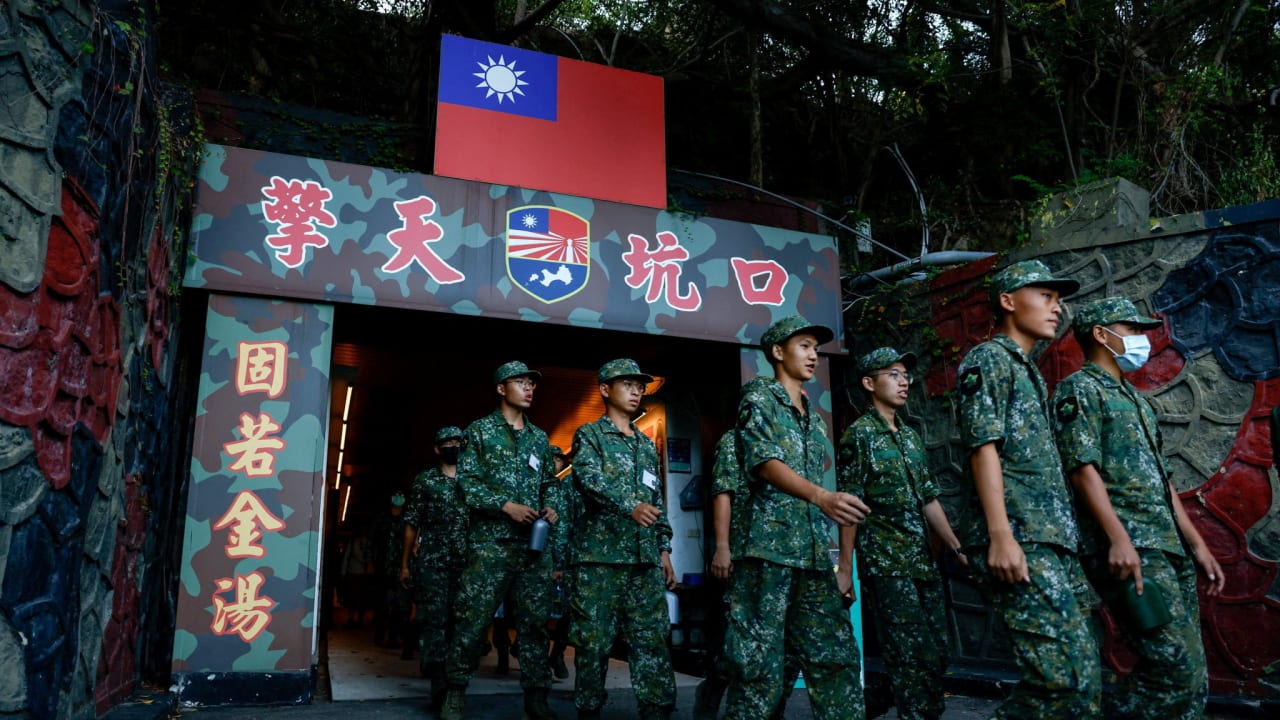
Taiwan alone produces more than 60% of the world’s semiconductors and over 90% of advanced chips. That explains why this industry has become a national security issue for the major powers. Blocking the export of sensitive technology to China now functions as a strategic lever in a wider struggle over control of the global economy in the decades ahead.
Undeniably, even crises that appeared to be purely health-related or logistical have exposed the scale of this overhaul. The COVID-19 pandemic served as a global shock, exposing how full dependence on foreign suppliers for critical goods can turn into a strategic vulnerability within days. Major countries lacked the capacity to produce masks, medicines, or microchips quickly enough. Supply chains optimized for economic efficiency were ill-equipped to withstand political or geopolitical shocks of this magnitude.
A new phase of redefining national security then began. Security now encompasses the ability to protect the economy from disruption, ensure supply continuity, and secure food, energy, technology, and industrial capacity during crises, alongside military and defense systems.
Ursula von der Leyen, president of the European Commission, captured this change succinctly, saying that “economy and national security are more linked than ever.” That statement has moved from theory to the operating principle for rebuilding industrial and trade policies among major powers.
The economy has become a means of waging war, not merely a casualty of it. Sanctions, asset freezes, technology cutoffs, payment disruptions, control of maritime chokepoints, and pressure on supply chains serve as instruments to achieve goals once assigned to armies. These tools are less costly politically, more sustainable over time, and sometimes more painful than direct military confrontation.
This explains why many countries have started to rethink concepts that seemed settled for decades. Economic efficiency alone proves insufficient when it sacrifices strategic resilience. Total reliance on the outside world has become an uncomfortable option compared with the era of open globalization. Even the notion of the “free market” has begun to recede under national security pressures and geopolitical competition.
Countries are now measured less by GDP size or financial reserves and more by their ability to endure prolonged shocks. Who possesses industrial capacity? Who can redirect their economy in a time of crisis? Who controls sensitive technology? Who guarantees the continued flow of energy, food, and medicine? These questions now belong to the deterrence equation, not to separate economic dossiers.
A new stage of global competition has therefore begun, focused on rebuilding economies to be more resilient in a world of longer, more complex conflicts – not just on armaments. The United States talks of reshoring critical industries, Europe seeks to reduce its energy dependence, China builds alternative technology and finance networks, and other countries amass reserves and local production capacity for potential global disruptions.
The problem is that many countries still view the economy through an outdated lens, treating it as a development matter separate from national security. The new reality integrates the economy into the structure of deterrence and sovereignty. A state that depends entirely on the outside world for its food, industry, technology, or even its payment systems places a portion of its sovereign decision-making outside its borders and becomes more fragile at the first major crisis. Countries that neglect to build resilient economies risk discovering, under real pressure, that their sovereignty was far weaker than they imagined.
The world is moving toward a reconfiguration of interdependence, not a complete end to globalization. Trade will continue, and markets will remain open to varying degrees. But absolute faith in the separation of the global economy from political conflict belongs to an era that is rapidly eroding.
The writer is a UAE political analyst and former Federal National Council candidate.