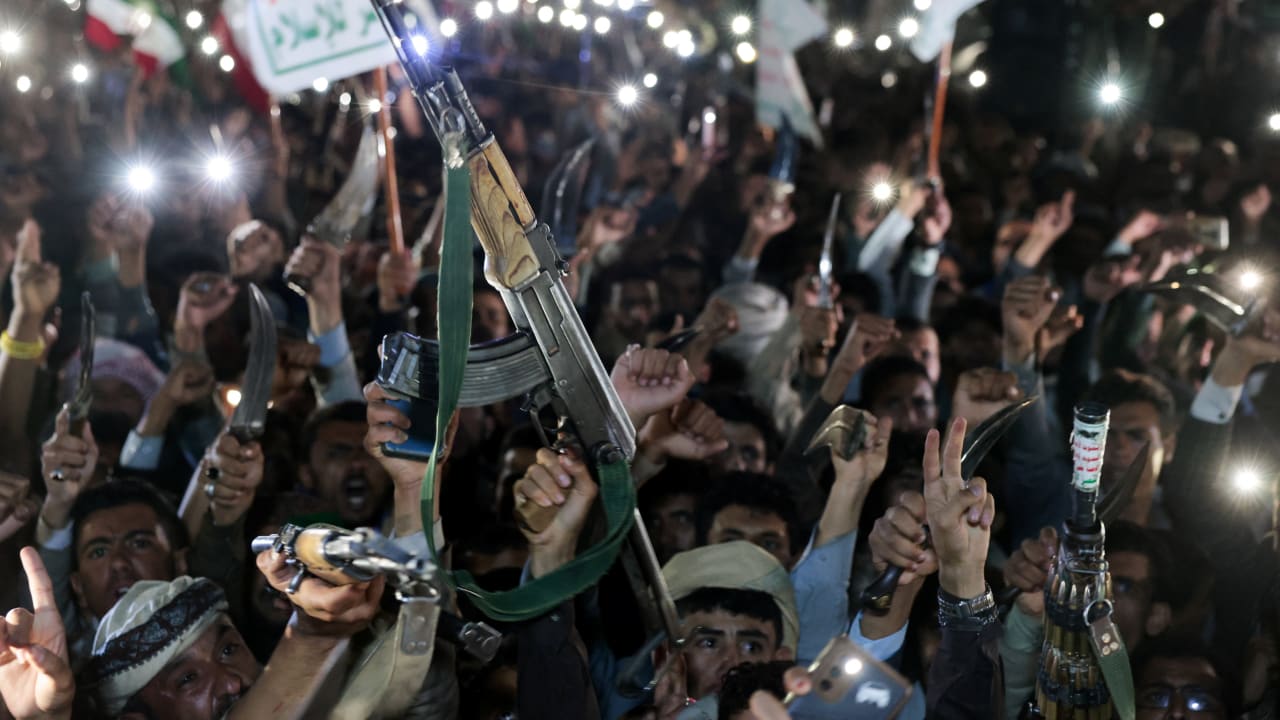
The Iranian-backed Houthis appear to be seeking a new conflict with Saudi Arabia. This comes after they claimed that Riyadh targeted Sana’a airport in Yemen, an area the Houthis control. This is the second incident in two weeks in which the Houthis claimed they would retaliate if Saudi Arabia prevented flights from Iran. The Houthis are seeking to open an air bridge to Iran. The goal is for them to show they can break the “siege” on Sana’a. If they bring in planes, then they could also bring in weapons.
The Houthis have been clear that they might retaliate if Riyadh tries to prevent planes from landing. The Houthis claimed on July 13 that they targeted the southern Abha Airport in Saudi Arabia. They have targeted Saudi Arabia many times over the last decade since Saudi Arabia intervened in Yemen in 2015 in support of the Yemeni government. Over the last several years, there has been a de-escalation and a kind of ceasefire in Yemen. This reduced Houthi attacks on Saudi Arabia in recent years. However, the Houthis appear intent on returning to the conflict.
The Houthis attacked Israel numerous times after the Hamas attack on October 7, 2023. They increased their attacks in 2025 as other elements of the Iranian-backed axis weakened. They have so far refrained from picking a fight with Riyadh. The Houthis were likely pleased to see Saudi Arabia distracted with a controversy with the UAE over control of a part of Yemen in December 2025. The UAE has backed the Southern Transitional Council in Aden in Yemen. The UAE and Saudi Arabia were partners in 2015, but over time their interests diverged. Their interests also diverge in Somalia and Sudan in the Horn of Africa.
More than meets the eye
As such, there is a lot more going on than may meet the eye. The Houthis have been biding their time amidst the Iran war. Between 2023 and 2025, they carried out attacks in the Red Sea. They stopped the attacks with the October ceasefire in Gaza. The Houthis had claimed to be backing Gaza. In recent weeks tensions grew. An Iranian envoy to the Houthis appeared in public again in Yemen. Other pieces have fallen into place with the US strikes in the Strait of Hormuz and Israel’s increased role in the Red Sea. Israel recognized Somaliland, for instance.
After the July 3 incident at Sana’a airport and also the Houthi Deputy Foreign Minister, Abdulwahid Abu Ras, meeting in the Houthi capital of Sanaa with the Iranian Ambassador to the militia, Ali Mohammad Rezaei; it was clear that a rising crisis was emerging. July 13 began with many open-source intelligence accounts tracking IRM1199, a flight bound for Sana’a. The Flight left Iran and flew over Oman on its way. This flight was said to be operated by Mahan Air.

The Houthis claimed that Saudi Arabia targeted the airport so the plane could not land. It apparently diverted to Hodeidah airport, which is also controlled by the Houthis."In a flagrant and brazen act of aggression, the criminal Saudi enemy has targeted Sana'a Intl Airport with a series of airstrikes, thereby ending the de-escalation phase and bearing the consequences of its aggression,” the Houthis said. Other reports noted that it was the Yemen government, backed by the Saudis, that had carried out the attacks. This meant Saudi Arabia was not directly responsible. The Houthis disagree and are blaming Riyadh.
An X/Twitter account claiming to represent Sanaa airport noted that “Mahan Airlines is just one of dozens of airlines that have been approached to operate flights to and from Sana'a International Airport, as part of the airport's reopening and the expansion of travel options for citizens. Sana'a Airport needs to open up to all airlines serving passengers, not to continue its siege under political slogans.”
An article in Al-Ain provided some insights. It noted that the officially internationally recognized Yemeni government had carried out the strikes on the airport. The government described the strike as a defensive measure designed to protect Yemen's sovereignty and stop unauthorized flights that it says violate the country's airspace.
Houthis cite truce violations
The Houthis claim the attacks are a violation of a UN-brokered truce of 2022. Although fighting has continued in parts of Yemen, the strike on Sana'a airport marked one of the most direct confrontations over Iranian support for the Houthis in recent months.
Now the Yemen government of President Rashad al-Alimi has said the Houthis were attempting to change things by receiving Iranian flights despite Yemen’s government objections. It’s worth noting that the Houthis have been in rebellion in Yemen for more than a decade. Yemen’s government said that they won’t let the Houthis serve Iran's regional interests. Al-Alimi emphasized that the government would not allow aircraft to violate Yemeni airspace and announced the creation of a crisis management team to coordinate military, diplomatic, legal, and media responses, Al-Ain noted.
On July 3, an Iranian aircraft carried a Houthi delegation from Sana'a to Tehran for the funeral of former Iranian Supreme Leader Ali Khamenei. On July 7, another Iranian aircraft reportedly landed at Hodeidah Airport hours after the strike on Sana'a. The United Nations expressed concern over the latest escalation.